

























































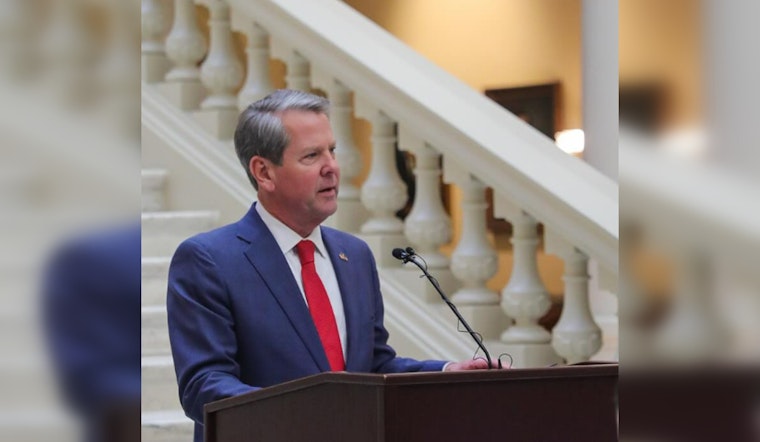
Georgia's Senate gave the green light Wednesday to a controversial school voucher bill, which proponents hail as a major win for school choice. The bill, now awaiting Gov. Brian Kemp's eagerly anticipated signature, will dish out $6,500 vouchers for private school tuition and home-schooling costs. According to WABE, the legislation passed with a 33-21 party-line vote.
Under Senate Bill 233, students in Georgia's bottom 25% of public schools based on academic performance could use the money on an array of educational expenses, including early college courses and tutoring services. Emotions ran high among the bill's supporters, with state Sen. Greg Dolezal, who sponsored the measure, proclaiming, "When I cheer today, I’m going to be cheering because more parents and more families will have more opportunities." Gov. Kemp, a Republican, is an entrenched supporter of the voucher plan and allocated part of his State of the State speech to advocate for it, saying, "I firmly believe we can take an all-of-the-above approach to education options."
The voucher's approval followed intense lobbying and persuasion from Republican House Speaker Jon Burns, who was instrumental in flipping the seven Republican and one Democrat holdouts from last year's vote. This marks a significant shift from the previous year when the bill's defeat in the House left its opponents in high spirits.
Opposition voices, however, have raised concerns about the potential fallout. Critics like Sen. Nabilah Islam Parkes warn that "This bill is a thinly veiled effort to segregate and discriminate under the guise of choice," pointing out that private schools, which can cherry-pick their students, might leave behind those in dire need of support - notably, special needs and struggling students. Furthermore, Democrats like Sen. Elena Parent of Atlanta argue the $6,500 sum is insufficient to cover tuition at most private institutions, highlighting that "The reality is that a $6,500 voucher here doesn’t go nearly far enough to afford any kind of quality education."
Despite concerns over constitutionality and adequacy, the bill's supporters emphasize its positive impacts. Dolezal countered arguments by stating, "Don’t tell these parents that this $6,500 bridge can’t change the lives of their kids, because it can," an assertion that highlights the sentiment among voucher advocates. Complementing the voucher program, the legislation includes measures such as bolstering teacher pay raises and allowing public pre-K programs to receive state aid for facilities.
As the bill transitions from the legislature to the governor's desk, it adds Georgia to a growing list of states that have embraced education savings accounts in the wake of the COVID-19 pandemic and subsequent debates over public school curricula. With over 21,000 scholarships potentially on the table.




