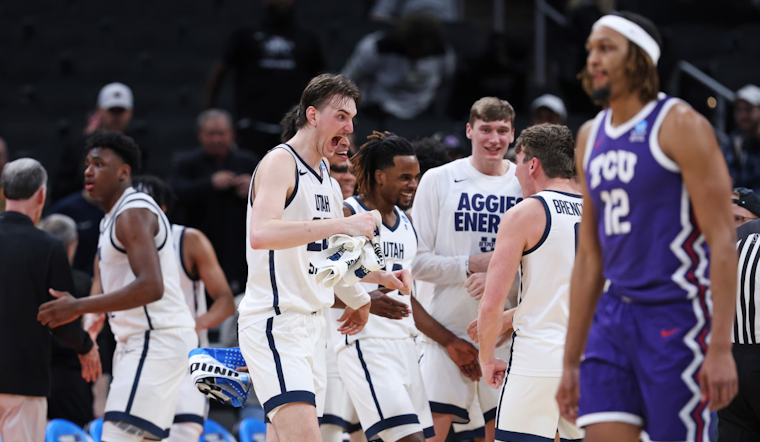
Bracket-busting March Madness could be hitting more than just fans' wallets – it's dunking on national productivity, too. A recent study from outplacement firm Challenger, Gray & Christmas suggests employers could see a $9.6 billion backlash due to distracted workers engaging with the tournament. Diving into stats, the firm calculated the potential productivity loss using findings that 68 million adults may wager during the event, combined with the Bureau of Labor’s employment-population ratio of 60.1%. The result? 40.9 million American workers potentially spend 408 minutes of company time on hoops-related hijinks.
Amidst this madness, TheStreet reported a startling number, placing an even higher price tag on the distraction. Companies across the U.S. could see a whopping $17 billion dissolve from their productivity figures thanks to the NCAA Tournament. Crashing the boards with corporate productivity losses is the fact that, with 78% of employees claiming that tournament festivities at work spike morale, many workplaces seem to be encouraging a little on-the-clock court action.
However, while these numbers suggest an employer's nightmare, some experts call a timeout on the panic. ASU Clinical Economist Daniel Marburger, in an interview with azfamily.com, waved off the figures as somewhat skewed. "It seemed a little excessive to me to say that they spent a half hour a day doing their brackets, and I’m thinking ‘how long does it take to do a bracket,” Marburger expressed his skepticism.
Every March, the country seems eager to call in sick, with WalletHub noting that 26% of Americans might skip work to follow the games. Marburger maintains the Final Four and Championship's scheduling outside business hours – with weekend play and Monday night after work – means the impact could be less severe than projected. Notwithstanding, the chances of curating a perfect bracket, a shot in the dark at 1 in 9.2 quintillion, seems to encourage the excitement as employees become closer through office pools, with 39% celebrating this shared camaraderie, as J.D. Durkin from TheStreet highlighted the phenomenon.
The consensus isn't remotely uniform, with opinions on the actual cost of March Madness to employers fluctuating between definitive research and qualitative reality checks.