

























































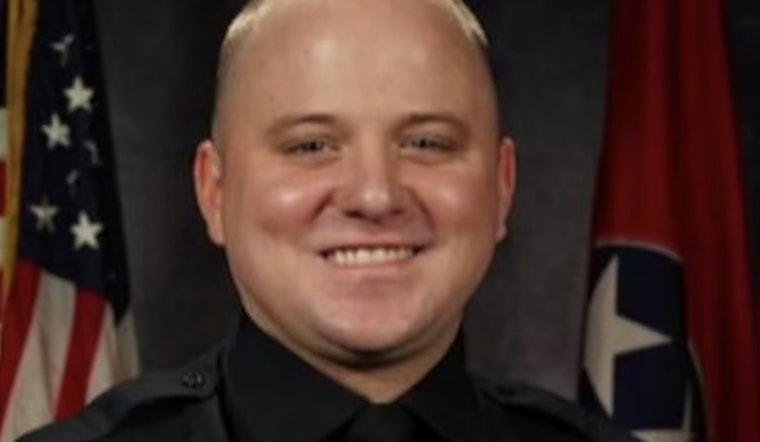
The woman convicted of the vehicular homicide of Brentwood police officer Destin Legieza will not be walking free anytime soon, the Tennessee Board of Parole decided. Ashley Kroese, who had been driving drunk on the wrong side of the road, had struck and killed Officer Legieza in the early hours of June 18, 2020. On Thursday, the Board concluded that Kroese, serving an eight-year sentence, would not be granted parole, a decision that resonated with the gravity of her offense.
Kroese's blood alcohol content was reported by the police to be twice the legal limit at the time of the crash. Her hopes for an early release from prison were quashed when Board Member Zane Duncan recommended that parole be declined, citing the seriousness of her crime, said Dustin Krugel, the board's communications director in an email obtained by WSMV. Duncan also proposed that her case should not be reviewed again for another three years.
Reflecting the profound loss that Legieza's death represented for his community, his family had been vocal in opposing Kroese’s release. Julie Ray, Legieza’s mother, told WKRN about the indescribable pain of seeing her child lifeless in the ER. Legieza, remembered as a dedicated officer and an avid Titans fan left behind a legacy as the only casualty in the line of duty in his department's half-century history.
The parole board has recommended that, in addition to good institutional behavior, Kroese should complete any programming as indicated by a risk and needs assessment geared toward understanding offenders and predicting recidivism. While she voiced regret for her actions during her trial according to an account by NewsChannel 5, for now, her apology has done little to sway the opinions of those who bear the weight of her actions. The full board must concur with Duncan's recommendation for the decision to stand, a governance that requires four out of seven votes aligning to chart the course of Kroese's fate.
As Kroese awaits her next review in March 2027, the community and the Brentwood Police Department continue to reckon with the fact that no elongation of a sentence, no denial of parole, can return Officer Legieza to his post or to his family. Yet, in the negation of Kroese’s parole request, justice at the moment speaks in the clear terms of accountability to which we all are held, one sobering reality for a decision that irrevocably altered many lives.





