

























































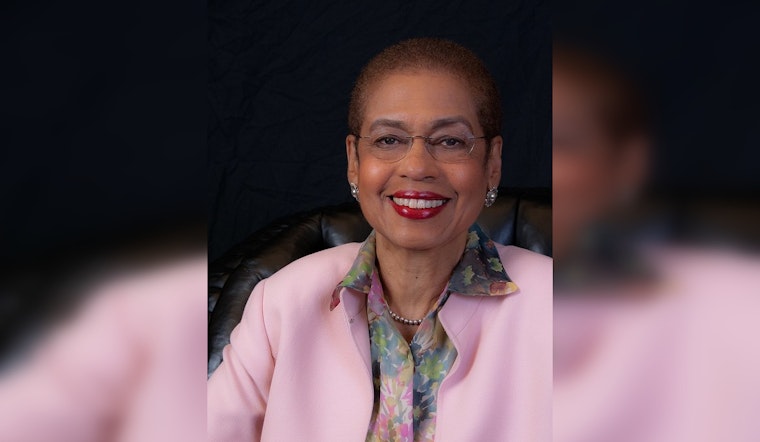
Rep. Eleanor Holmes Norton is pushing to make America's most iconic democratic symbol, the U.S. Capitol, more camera-ready for the commercial film and photography industry. Norton (D-DC) introduced a bill that would expand access for commercial shoots on Capitol grounds, going beyond the currently permitted Union Square, as reported by her office.
The bill, which is likely to spark discussions on patriotic representation and commerce, would permit such activities as long as both chambers of Congress are not in session. Norton argues that there's no reason to strictly confine this access to Union Square, and her proposal aims to give Capitol Police full discretion to issue permits. She believes the move will not only spread the democratic narrative globally but also crank up D.C.'s economic engine. "We should encourage commercial filmmaking and photography at the Capitol to share this symbol of democracy with the world," Norton said, in a statement obtained by her office.
Norton's proposal comes with a careful nod to security, emphasizing that Capitol Police would retain control over permitting, ensuring that security concerns do not go unaddressed. The bill also includes provisions for the Architect of the Capitol (AOC) to charge fees, which would be funneled into the Capitol Trust Account for maintenance and improvements, as is done currently for Union Square permitting.
Norton insists that the familiar views of the Capitol should not be off-limits to commercial filmmakers and photographers, as they are "perhaps the best modern vehicles for telling the nation's story." The view from Union Square, she contends, offers the least-recognized panorama of the Capitol, and this restriction doesn't hold water in a place teeming with tourists freely capturing their own footage. "Movies and television shows that involve the Capitol should not have to go to other cities or use a fake building," Norton told her office, advocating for a more authentic and business-friendly approach.
The bill, if passed, would presumably allow filmmakers and photographers from across the nation and the world to portray the U.S. Capitol with greater authenticity, potentially casting a fresh light on American democracy. Norton emphasizes the Capitol's role in inspiring both Republicans and Democrats as a reflection of their shared democratic values. "Indeed, most of the world reveres our system of government largely through commercial films and photos of the Capitol," she said, recognizing the international influence of such imagery.





