

























































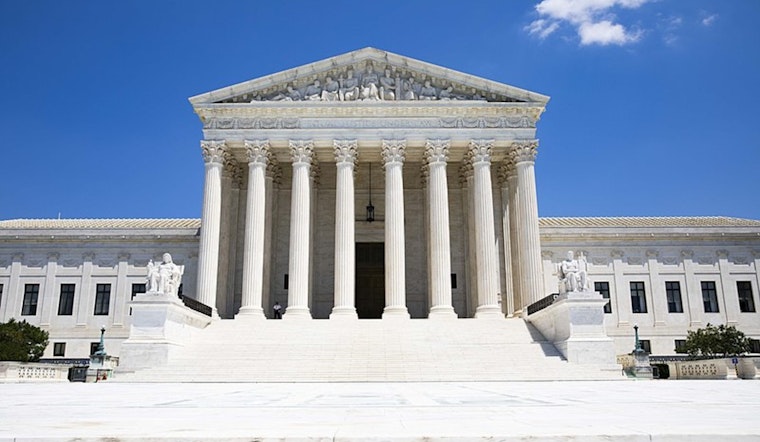
The U.S. Supreme Court has slammed the brakes on the implementation of a Texas law deemed to be one of the most stringent anti-immigrant measures in the country. Texas Senate Bill 4, aimed at allowing local and state law enforcement to arrest and remove individuals suspected of being in the state illegally, is on hold until at least March 18, according to the ACLU of Texas.
The legislation, which critics argue would lead to racial profiling and the separation of families, was due to take effect contingent upon the rulings of the federal courts. However, the Supreme Court has chosen to extend its stay, originally put in place to allow consideration of an application to review a decision by the Fifth Circuit Court of Appeals that would have let S.B. 4 become operational while an assessment of its legality was underway.
In a wave of reaction, Adriana Piñon, legal director at the ACLU of Texas, expressed support for the Supreme Court's decision. "We praise the Supreme Court’s decision to not rush this unconstitutional and extreme anti-immigrant law into effect. S.B. 4 threatens our most basic civil and human rights as citizens and non-citizens alike. We will continue our efforts to prevent this hateful law from ever harming our state," Piñon said, as per the ACLU of Texas.
Others have echoed this sentiment. "We are grateful that the Justices have blocked this hateful law, which should never have gotten this far in the first place," Rebecca Lightsey, co-executive director of American Gateways said, as reported by the ACLU of Texas.
With the Supreme Court's hold in place, the law remains at bay while the Fifth Circuit speeds up the consideration of the appeal, setting oral arguments for April 3 in New Orleans. Despite today's ruling, the lasting fate of S.B. 4 hangs in the balance, leaving advocates and opponents of the law to await the final judgment on its constitutionality and impact on Texas communities.





