

























































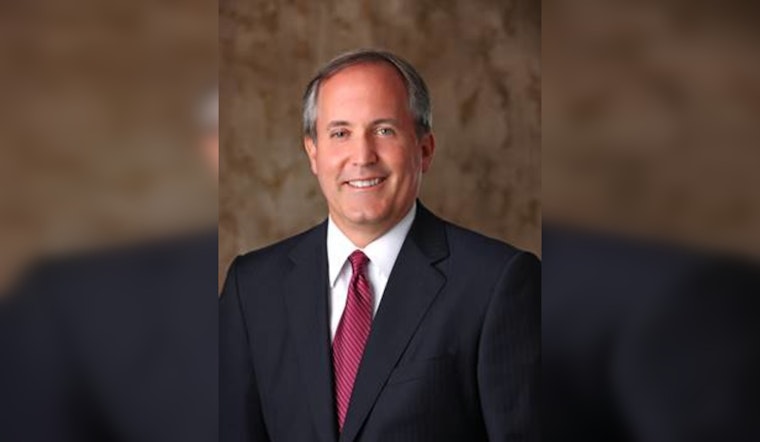
After a drawn-out legal battle spanning nearly a decade, Texas Attorney General Ken Paxton is reportedly close to striking a deal that could see his criminal charges dropped without a full-blown trial. According to three sources in the know, Paxton may sidestep what could have been a 99-year prison stint by penning an agreement with prosecutors, according to the Austin American-Statesman.
The pending resolution hinges on a series of obligations the AG has to fulfill, including community service, completing advanced legal education classes, and paying a hefty restitution, rumored to be in the range of $300,000 to $400,000. In this yet-to-be-finalized deal, Paxton wouldn't be required to formally plead, and he needs not to commit any further legal infringements over an extended timeframe, the American-Statesman reveals.
This form of judicial arrangement, identified by various terms such as "conditional dismissals," doesn't customarily call for judicial approval, reflecting Texas prosecutors' sweeping discretionary powers in case resolutions. Senior Reporter Tony Plohetski notes that such agreements are not unusual in the state, especially in urban areas, where they serve as a tool for defendants to avoid convictions on their records while bestowing vast decision-making authority onto prosecutors, as reported by KVUE.
Dan Cogdell, representing Paxton, remained tight-lipped, indicating in a text message, "I am not going to comment on something that hasn't happened and may well not happen," in a statement obtained by KVUE. This negotiation could potentially cap off a series of legal hurdles for Paxton—who acknowledged in 2014 a "paperwork error" in failing to register with the Texas State Securities Board, an infraction he ironically helped legislate into a crime as a lawmaker.





