

























































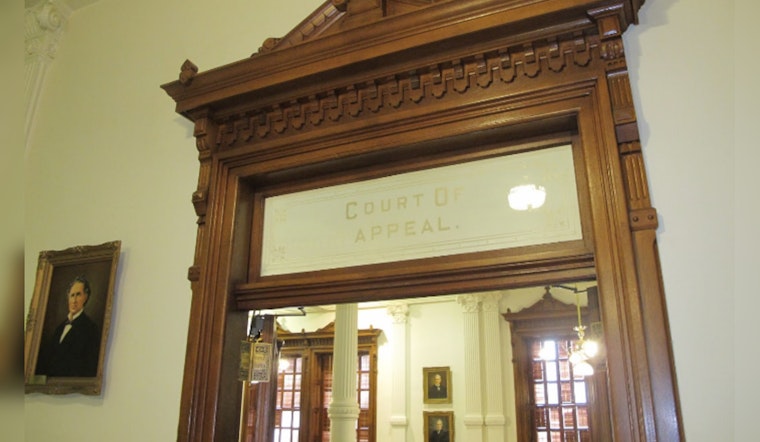
In a turn of events that reflects the often complex nature of law and justice, the Texas Court of Criminal Appeals made the decision to commute the sentence of 64-year-old Randall Mays from death to life imprisonment without parole after confirming his intellectual disability. First reported by The Texas Tribune, Mays was originally sentenced to death in 2008 for the killing of two sheriff's deputies. However, his lawyers have long defended that he should be exempt from execution due to his mental incapacity, a claim supported by extensive assessments of his intellectual capabilities. "The evidence of Randall's intellectual disability is overwhelming. He has a 63 IQ. His intellectual deficits have been seen, and observed by others, throughout his life from childhood to military service, and throughout his adulthood,” Benjamin Wolff, director of the Texas Office of Capital and Forensic Writs, said in a statement.
Meanwhile, also on Thursday, a Texas appeals court overturned the conviction of Crystal Mason, who had been sentenced to five years in prison for casting a provisional ballot while on supervised release for a federal conviction. As explained by CBS Austin, Mason insisted that she was unaware of her ineligibility to vote, a point that ultimately led to her acquittal. "I am overjoyed to see my faith rewarded today," Mason told CBS Austin. "I was thrown into this fight for voting rights and will keep swinging to ensure no one else has to face what I’ve endured for over six years, a political ploy where minority voting rights are under attack."
In the Mays case, it is notable that the Henderson County District Attorney did not dispute Mays' intellectual disability in the court's reconsideration of his sentence. Despite the resentencing, the district attorney expressed disappointment, highlighting that the criteria defining intellectual disability had changed since Mays' original sentence. “We stand ever faithful in our support of the Habelt and Ogburn families and our law enforcement family who must live with the effects of the horrible acts committed by Randall Mays on that day. While the justice they deserve, and Randall Mays has earned is now not an option, we gain small comfort in being able to say with confidence that Randall Mays will die in prison,” District Attorney Jenny Palmer stated.
The decisions in both cases underscore the complexities of the legal system and its intersection with human rights issues. In Mason's situation, the Second Court of Appeals acknowledged that the evidence presented did not sufficiently prove that she knew of her ineligibility. The Tarrant County court wrote, “We conclude that the quantum of the evidence presented in this case is insufficient to support the conclusion that Mason actually realized that she voted knowing that she was ineligible to do so and, therefore, insufficient to support her conviction for illegal voting,”
These two cases reflect an evolving landscape where the legal system must continuously reconcile the application of the law with emerging social standards and the changing understanding of justice. While the outcomes of Mays' and Mason's cases diverge, each shines light on the wider discourse surrounding the death penalty, intellectual disability, and the rights of individuals within the voting process.





-4.webp?w=160&h=400&fit=crop&crop=edges)