

























































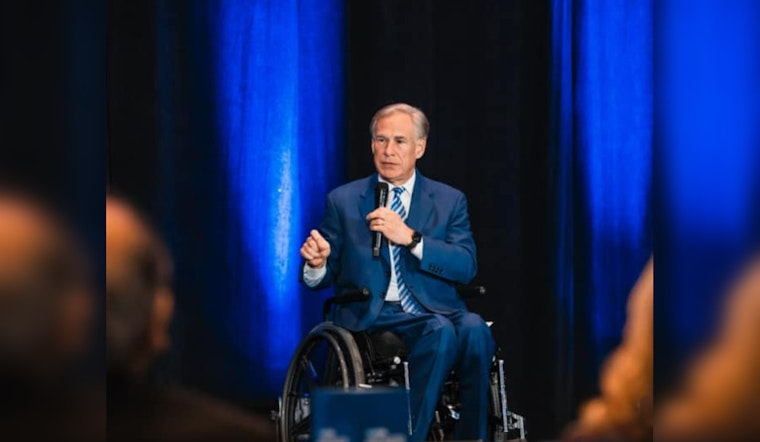
In response to mounting tensions on Texas college campuses amid the Israel-Hamas conflict, Governor Greg Abbott has taken executive action demanding universities tighten their free speech policies. Signed Wednesday, the order aims to clamp down on what the governor perceives as a "sharp rise in antisemitic speech and acts" at higher education institutions, as detailed in reports from FOX San Antonio and The Texas Tribune.
Abbott's order calls for the inclusion of a definition of antisemitism in university policies, with repercussions for policy violations potentially including expulsion. Texas' public universities are given a 90-day deadline to overhaul their policies and demonstrate enforcement of these revised rules. Asserting his support for Israel and the Jewish community, Abbott proclaimed in a statement obtained by FOX San Antonio, "The State of Texas stands with Israel and the Jewish community, and we must escalate our efforts to protect against antisemitism at Texas colleges and universities and across our state."
However, the move has sparked concern among free speech advocates like Adam Steinbaugh, an attorney for the Foundation for Individual Rights and Expression (FIRE), who argues that the First Amendment protects all forms of speech, including those that some may find offensive. "He can ask the universities to review their policies all he wants, but the First Amendment dictates only one outcome, which is that this type of speech protests and speech about Israel or Palestine that's protected," Steinbaugh told FOX San Antonio. He highlighted that the true role of the First Amendment is to safeguard the very speech that can deeply offend us.
On the flip side, the executive order specifically targets Palestinian student groups, whom Abbott accuses of contravening free speech policies, stating these groups ought to face disciplinary actions. This has added to the concerns of those who view the order as stifling productive campus dialogue, fearing it could mute the transformative power of debate and discussion that universities aspire to foster. "State-mandated campus censorship violates the First Amendment and will not effectively answer anti-Semitism," FIRE criticized in a statement. "By chilling campus speech, the executive order threatens to sabotage the transformative power of debate and discussion," according to the advocacy group's critique cited by The Texas Tribune.
Universities, such as UTSA, have already signaled their intention to comply with the executive order. Joe Izbrand, UTSA’s associate vice president for strategic communications and external affairs, affirmed the university's commitment to providing a safe environment for free speech and discourse, balanced with the intent to not tolerate hateful acts. "UTSA is committed to fostering free speech and constructive discourse on campus where students, faculty, and staff can share differing ideas and points of view in a safe environment. We do not tolerate hateful acts against any group or individual. We fully intend to comply with the governor’s executive order regarding anti-Semitism on college campuses," Izbrand's statement, which was made today and shared by FOX San Antonio.





