

























































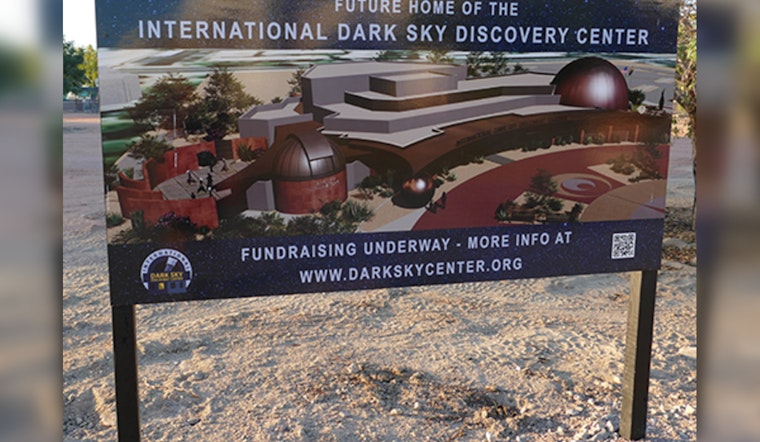
Get ready for a stellar day out in Fountain Hills as the town gears up for what's being billed as Arizona's largest solar eclipse viewing party, coinciding with the groundbreaking for what will soon be the International Dark Sky Discovery Center. Slated for Monday, April 8th, the event will kick off before 11 am at 12845 N La Montana Drive, as per an announcement by the town of Fountain Hills.
While gazing at the skies, eclipse enthusiasts can expect to do so in safety, with the International Dark Sky Discovery Center Board distributing special eclipse shades. They're stepping up the excitement with a solar telescope to beam the event live on a massive monitor. Tunes fitting for an intergalactic journey will be spun by a live DJ, adding to the celebratory atmosphere.
The groundbreaking ceremony will also include comments from local politicians and a traditional blessing by an elder from the Fort McDowell Yavapai Nation. McCarthy Building Companies is ensuring those present are well cared for with the provision of tents, seating, and light refreshments.
To be situated in an official International Dark Sky Community, the center, spanning over 23,000 square feet, will boast a planetarium, an observatory, an exhibit hall, and more. This significant development highlights Fountain Hills' position as the 17th such designated community globally, noted for its rare proximity to a metro area as large as Phoenix.
The groundbreaking festivities will commence at 10:30 am, with the community gathering to witness the sky's transformation. As the eclipse draws near its peak following the formalities of the groundbreaking, the viewing party will hit its stride. For those seeking more information or wishing to arrange interviews, Mike Scerbo at Rose Allyn PR is the point of contact, available at [email protected] or 602-615-6523, according to the Fountain Hills website.
For those looking to support this venture, the IDSDC is in search of donations and offers naming rights to help reach its financial targets. The new center is not just an asset for the star-struck but will also serve as a vital tool for K-12 and higher education in Arizona. In an age where 80% of people have lost the night sky to light pollution, affecting everything from wildlife to human health, this development is a glimmer of hope.
For more details on the project and how to contribute to its realization, interested parties are directed to the IDSDC's official website. The center aims to emphasize the importance of dark sky preservation in astronomy and for the health of all Earth's inhabitants.





