

























































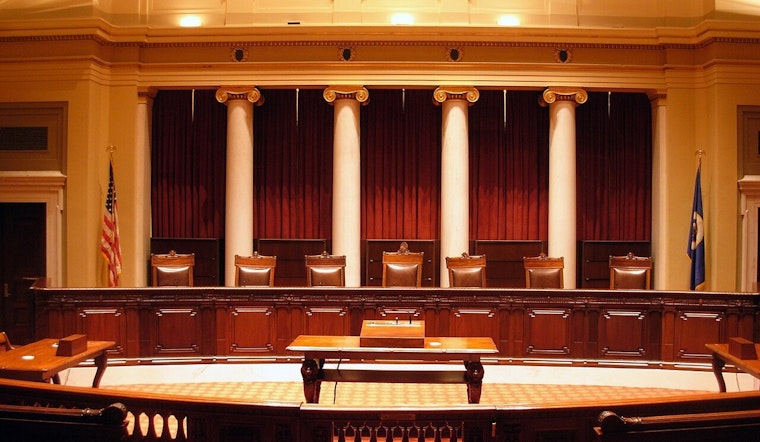
A notorious Minneapolis gang member will be trading street corners for prison cells after a federal court handed down a nearly 20-year sentence for RICO conspiracy and other felonies. Montez Brown, known as "Tez Blood" in the Highs gang, was sentenced to 235 months in prison followed by five years of supervised release, the U.S. Attorney’s Office announced.
In a bid to staunch the hemorrhaging caused by gang violence in Minneapolis, U.S. Attorney Andrew Luger has aggressively pursued members of the Highs gang, leading to multiple convictions. "We are addressing gang violence for what it is: organized criminal activity," Luger said, describing the damage inflicted by gangs like the Highs as "staggering." They have been involved in shootings, drug trafficking, and other crimes. Brown, 32, established himself as a respected figure within the gang, rising to become a key fentanyl trafficker.
According to court documents obtained by the U.S. Attorney's Office, Brown and his associates from the Highs gang have operated since 2004, dominating areas around West Broadway Avenue and Lyndale Avenue North in Minneapolis. The group was unapologetic about their illicit activities, often flaunting their power and wealth on social media. Officials said that gang members were expected to prove their loyalty, by "putting in work" through violence or sourcing drugs and weapons.
Brown's conviction was part of a broader crackdown on the Highs, which has so far seen thirteen guilty pleas and multiple imprisonments. Notable among these are Chase Robertson, "Chase Loco," sentenced to 75 months, and Tony Jelks, "BD," who received a 156-month sentence. Several other members are awaiting their turn to be sentenced.
The crackdown on the Highs gang has been a concerted effort involving agencies such as the ATF, FBI, and Minneapolis Police Department, among others. Assistant U.S. Attorneys Samantha H. Bates, Justin A. Wesley, Jordan L. Sing, and Albania Concepcion, together with Trial Attorney Brian W. Lynch, have been key figures in prosecuting these cases. The convictions represent a significant step in efforts to dismantle organized crime in the region and restore safety to the communities affected by gang operations.





