

























































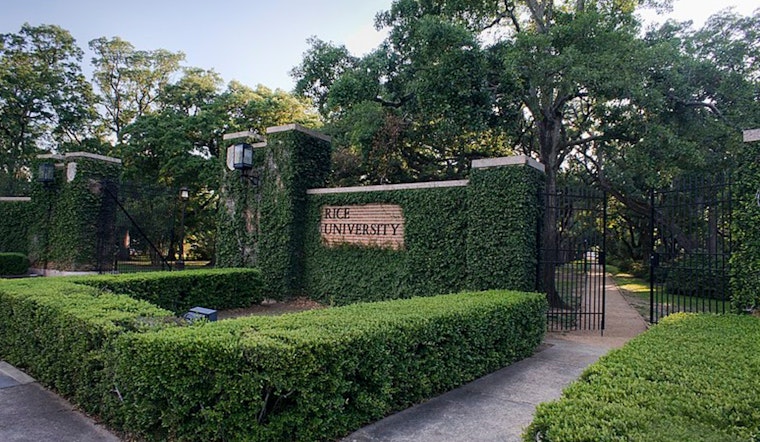
Rice University has found itself in the midst of a free speech dilemma and criticism over its handling of antisemitism, earning a "D" rating from the Anti-Defamation League (ADL) on their inaugural Campus Antisemitism Report Card. As reported by the Houston Chronicle, several rabbis have contested the grade, stating it doesn't accurately reflect the Jewish life and anti-antisemitism efforts on campus.
In response to the poor rating, Rice University has declared its intentions to provide the ADL with supplemental information beyond the organization's methodology. The university cites a series of faculty-led educational series and a strong policy against antisemitism, among other proactive measures, as part of their defense. Controversy has spiked at educational institutions nationwide as student protests in support of Palestinian people and criticism of Israel increase. Rabbi Shmuli Slonim, of Chabad at Rice, mentioned to the Houston Chronicle that the grade didn't mirror the full picture of Jewish student life.
Meanwhile, heavy hitters like Harvard and MIT have been given an "F" grade, igniting concerns among students and alumni. The ADL's campaign seeks to promptly confront the uptick in antisemitic incidents on campuses, which have garnered heightened attention since a turbulent October 7th incident. Jonathan Greenblatt, ADL CEO, expressed the urgency of institutions to foster an environment that shields all students from hate, as detailed by the Jerusalem Post.
According to the ADL, which evaluated 85 schools, the criteria used for ratings included administrative action and policies, incidents on campus, and Jewish student life, to aid stakeholders in understanding each campus's climate in relation to antisemitism. Institutions like Brandeis and Elon University set positive examples, receiving "A" grades for their staunch policies and dialog initiatives. However, others such as the University of Hartford and Columbia University need to to quickly step up their efforts, only scoring a "C" and a "D" respectively, the Jerusalem Post emphasizes.
Amidst these revelations, universities are left to balance the complexities of upholding free speech rights with the need to address and mitigate antisemitism. This balancing act is further complicated by instances at Rice, such as an antisemitic note sent to a professor and contentious student government activities, as reported by the Houston Chronicle. The ADL's notations of these events and Rice's subsequent D grade have raised questions regarding the broader struggle facing universities in identifying and addressing hate without curtailing the contentious yet protected sphere of political debate.





