

























































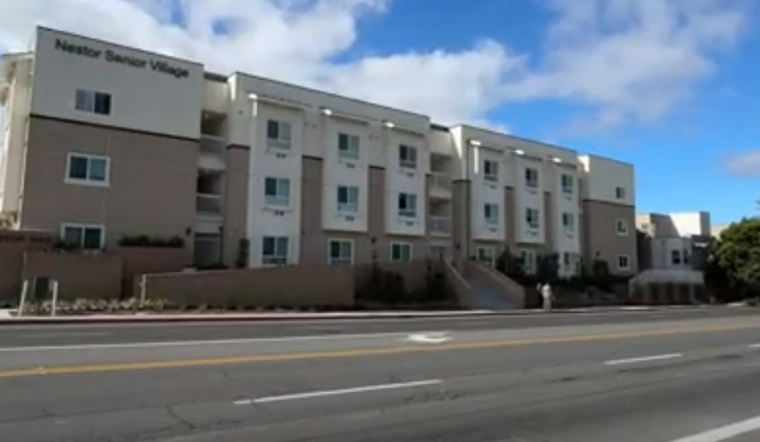
The struggle for affordable housing in San Diego has seen a warm ray of hope as a new senior living facility, dubbed Nestor Senior Village, opens its doors in South Bay, offering a lifeline to seniors hovering on the brink of homelessness. This ambitious project, featuring 73 apartment homes, is tailored for adults aged 55 and above who earn less than 30 percent of the area's median income, with about half of these homes dedicated to individuals requiring mental health services via the County’s No Place Like Home program.
Developed by National CORE and sited on a parcel of land generously provided by the Nestor United Methodist Church, a name synonymous with support for the unhoused in the region, the complex includes accessible studios and multiple resident amenities. These facilities range from an outdoor recreation space to a food pantry, sharing these spaces intricately with the adjacent church. Moreover, Nestor Senior Village has a community room, a courtyard replete with outdoor seating, and a significant provision for case management: 34 parking spots catering to residents' vehicular needs.
"San Diego’s high cost of housing has resulted in a growing number of seniors experiencing homelessness," David Estrella, director of the County’s Housing and Community Development Services department, told the County of San Diego. He sees "investments and partnerships like this as a critical part of the County’s commitment to provide the housing, and stability it can bring, to our most vulnerable older adults."
What's notably heartening is the development's proximity to daily necessities. It is within walking distance of grocery stores, pharmacies, parks, and the Nestor Community Health Center and is flanked by bus stops and the nearby trolley. Since 2017, the County has funneled over $305 million into affordable housing, a strategy said to open more than 2,100 units—with an additional 3,286 units on the horizon.
This initiative is a puzzle piece fitting into the County’s Housing Blueprint, a master plan designed to counter the region's housing crisis. Once the current projects are completed, the number of affordable housing units supported by the County will swell to over 9,500, translating into roofs over the heads of nearly 21,000 individuals in desperate need of shelter. This development is not just about bricks and mortar; it represents a fundamental step towards stability and dignity for many San Diego's South Bay community senior citizens.





