

























































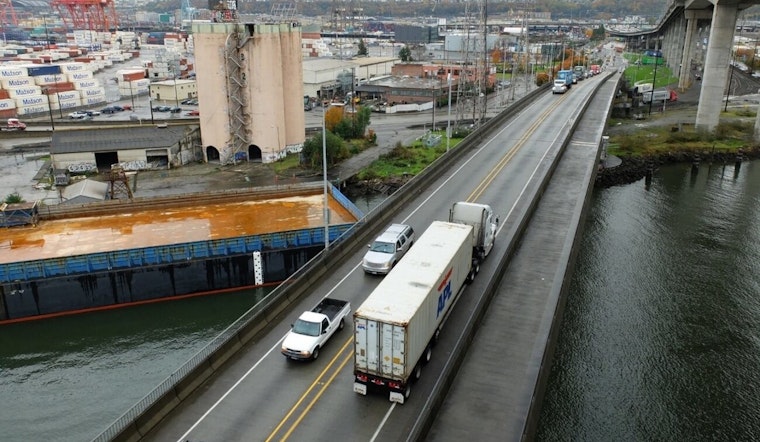
Beginning April 19, the Spokane St Swing Bridge, fondly known as the low bridge, will be off-limits to vehicles, cyclists, pedestrians, and anyone trying to traverse the Duwamish Waterway. The shutdown, extending through April 28, is slated to allow for essential upgrades to the bridge’s control system which, after more than three decades, is finally getting a much-needed facelift. These updates are part of the comprehensive Spokane St Swing Bridge Rehabilitation Program.
The Spokane St Swing Bridge (Low Bridge) will close to all travelers between April 19 and April 28.
— Seattle Department of Transportation (@seattledot) April 9, 2024
We’re upgrading control and communications systems to make the bridge reliable and resilient.https://t.co/ABhFVQ76eS
The upgrades will require crews to temporarily shut down the bridge to reroute tower control wires critical for operating the bridge's hydraulics. This task demands a new conduit to be laid beneath the waterway, as reported by SDOTBlog. The statement elaborated that the project's intention is "to replace the control system" and to ensure that newer communication lines connect the computers, control tower, and the moving parts smoothly.
For the uninitiated, the Spokane St Swing Bridge not only serves as a thoroughfare but stands as a symbol of Seattle's ingenuity and commitment to infrastructure. The bridge has facilitated countless commutes and aided in the city's economic flow. Understanding the role it plays, SDOT seeks the public’s patience and, in turn, has provided resources to help people navigate the city during the upcoming interruption.
The rehabilitation efforts will specifically target the antiquated system of logic controllers, buttons, switches, and wiring. All these components are integral to the function of lifting and swinging the bridge spans and activating the gates that protect against traffic when the bridge is open. The ongoing commitment to modernize Seattle’s infrastructure will make it able to more effectively serve its growing population.
Residents and commuters are encouraged to plan and seek out alternate routes during the closure period. With Seattle's landscape crisscrossed by waterways and bridges, such closures are not merely inconveniences but reminders of the delicate balance between mobility and maintenance. Up-to-date information regarding the project and traffic advisories can be found on the SDOTBlog, ensuring that those affected by the closure have access to essential planning tools.





