

























































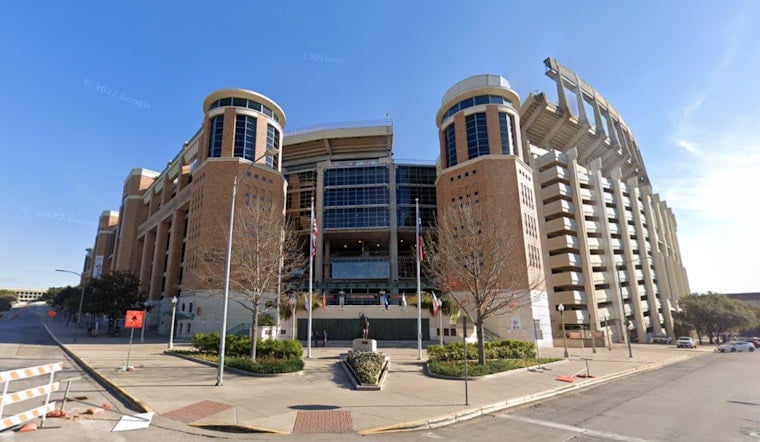
At the University of Texas at Austin, the Israel-Hamas war has fueled a divide among Jewish students, where protests and counter-protests have erupted challenging both Jewish identity and free speech. Earlier this April, a table marked with the invitation of dialogue, “One Palestinian. One Jew. Ask us anything” became a symbol of a rare attempt at middle ground, according to a report by the Texas Tribune. Students Jadd Hashem and Elijah Kahlenberg found themselves engaged in heated debates, defending the courage of their convictions against a backdrop of discomfort and tension on campus.
In response to the bloody conflict that took over 1,100 lives at a music festival in Re'im, Israel, UT-Austin became a hotbed for demonstrations, leading to arrests and clampdowns. Protests at the university drew criticism, with some seeing the frictions as an antisemitic response to the strife in the Middle East, while others saw it as necessary activism against state violence. In the fallout, students like Kahlenberg faced pejorative accusations, questioning the very fabric of his Jewish identity. He told the Texas Tribune, "But for me, they were like, 'oh, Elijah, this guy is a traitor.'"
The series of demonstrations have also struck a deep chord with students who have felt compelled to hide their Jewish symbols for fear of harassment. Levi Fox, a UT-Austin sophomore, shared harrowing personal tales of discrimination during the Texas Senate Subcommittee on Higher Education hearing. Students like Fox argue that chanting "Intifada revolution" equates to advocating violence, while Carla Robinson, a Jewish UT graduate student on the protesting side, insists that conflating anti-Zionism with antisemitism dilutes the struggle against genuine anti-Jewish hate.
Despite the fraught atmosphere, UT-Austin also became a ground for profound reflection and dialogue among students. Anthropology professor Aaron Sandel hosted an intimate space for conversation, aiming to differentiate between feeling unsafe and uncomfortable — redundant emotions in these turbulent times. Some students, including Sam Law, a Jewish graduate student and participant in the pro-Palestinian protests, highlighted their familiar trauma in echoes of their own family's Holocaust experiences, as he shared in the Texas Tribune interview.
Visiting poets at UT-Austin, Naomi Shihab Nye and Edward Hirsch, commented on the critical nature of fostering understanding through dialogue. The chants and slogans that have become a staple of such heated exchanges signify more than just words; they represent deeply entrenched positions that impede the path to empathy and peace. Amidst these trials, conversations like the one facilitated by Hashem and Kahlenberg or Professor Sandel's discussion circles offer tentative steps towards bridging the divide and finding solace and solidarity within the community.





