

























































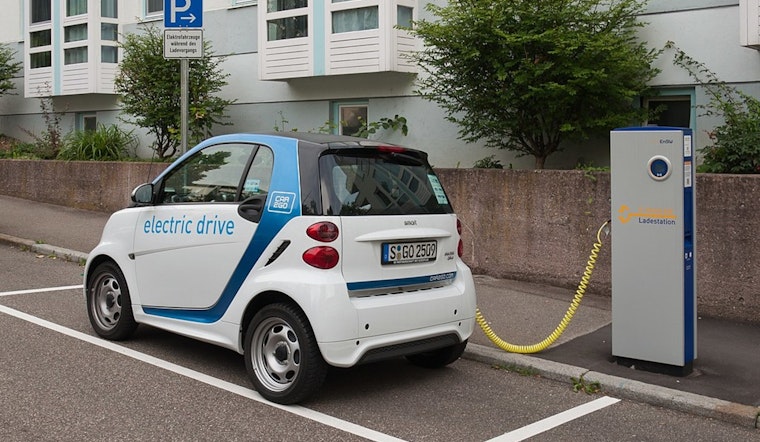
Austin's cityscape may soon be dotted with a fresh wave of electric vehicle chargers if the City Council follows through on a new proposal aimed at cutting down pollution. At a meeting set for Thursday, the councilors will deliberate on tweaking the land development code to streamline the installation of such chargers, as reported by KVUE.
Councilmember Ryan Alter illuminated the current bureaucratic tangle—wherein getting a charger set up could devour up to a year and the amendment, he said, could fundamentally shift that timeline, "What this change would do is simply say, 'These areas are automatically allowed to have it.' And so, if you purchase that property or already own it, you will be able to immediately move forward with creating vehicle charging there," Alter said, envisioning an Austin where 40% of vehicles humming on the streets would be electric, a goal tethered tightly to the notion that folks must trust they can power up once they spin away from their homes; the framework suggests chargers springing up along key transit corridors, excluding residential zones, as per KVUE.
While chargers in neighborhoods won't get the green light, main drags like Lamar Street and William Cannon Drive are pinpointed as future hubs for the charging stations. These hubs, proponents argue, will bolster electric vehicle adoption by slicing the inconvenience of finding a charge point in the ever-growing city.
Electric vehicle owner William Potratz shared with KVUE his firsthand experience; he powered his ride in Downtown Austin, a 30-minute process that pushed his car's range to 200 miles, crediting the cheaper electric fill-up compared to traditional gasoline as a draw, “Certain times around the year, it’s economical to have an electric car, we are trying to do our part to cut down on pollution and gasoline,” he said, vocalizing his support for a denser network of charging spots throughout Austin, signaling intent and demand for the city's move towards a cleaner transit future.
The outcome of the City Council's vote, estimated to unfold Thursday at 10 a.m., is positioned as a decisive moment for Austin's relationship with electric vehicles and the environment. A signal towards an electrified horizon, the council's decision may be the juncture where convenience collides with sustainability and where a city's infrastructure bends, not towards the whims of the present, but of the future.





