

























































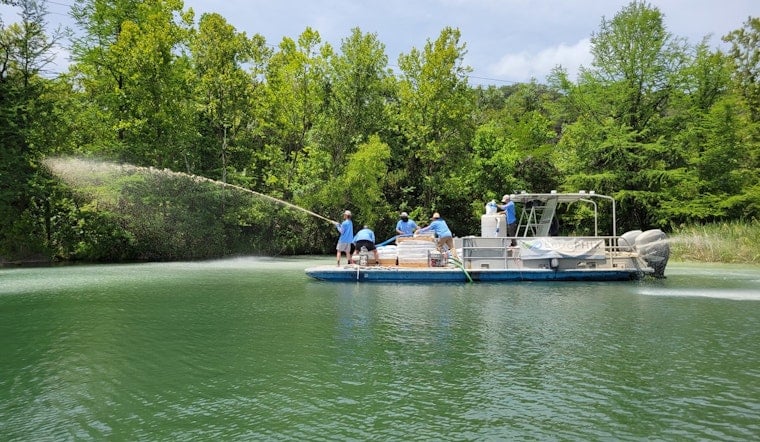
Austin residents might breathe a little fresher around Lady Bird Lake this summer as the City dives into the fourth year of its five-year scheme to combat pesky algae blooms. In an ongoing battle of wits against Mother Nature, the City plans to sprinkle a hefty dose of lanthanum-modified clay on parts of the lake—a tactic aimed at tamping down the nourishment for those bothersome blue-green algae.
The clay's role is clear: latch onto phosphorus, the algae's favorite snack, and make it disappear into a mineral form that's no buffet for the bloom. According to a release from the City of Austin, the first assault on the algae's larder kicks off June 3, with backup dates set for June 4 if Mother Nature plays hardball. While the gray slurry might look uninviting, recreationists are advised to give the barge a wide berth—it's all safe, but no one likes a cloudy paddle.
This year, new zones are under the microscope—especially an area west of I-35 that’s been picked for its potential educational value to see if any unwanted guests, like aquatic insects, are gatecrashing the anti-algae party. The past years have been a mixed bag with some success at Red Bud Isle but less cheer near the Festival Beach Boat Ramp, where fresh sediments keep wiping the clay's good work.
Citizens aren't off the hook, though. While the City is forking over $300,000 annually through drainage charges on utility bills to keep the lake from turning into a neon mess, the call to arms against algae includes reducing the buffet of nutrients that wash into the lake. The release emphasizes that, alongside limiting fertilizer use and picking up after Rover, planting trees and shrubs can be a big help. But the problems aren't just from the home turf—upstream neighbors and climate change are also tossing their ingredients into the soup
The scourge of harmful algae blooms isn't unfamiliar to Austin's waters with an unwanted visitor cropping up yearly since 2019. It's not all bleak; compared to other parts of the country, Austin's waters are still open for business, with the toxicity problems mostly sticking to patchy mats of algae. And while the risk to folks is relatively low — it's the four-legged swimmers who are more likely to cop a nasty hit from these toxic blooms, so best keep Fido from slurping up or licking that lake water
.
Algae might not be the only unwelcome element in Austin’s waters, but with proper caution and a little help from science, the city’s trying its best to make sure residents and their pooches can enjoy a summer that’s more about the sun and less about the sludge. And should any swimmers come down with a bout of the mysteries after a dip, there's a number on speed dial—Texas Poison Control Center at 1-800-222-1222—and don't forget to give the City a heads up via their reporting form at AustinTexas.gov/Algae.




