

























































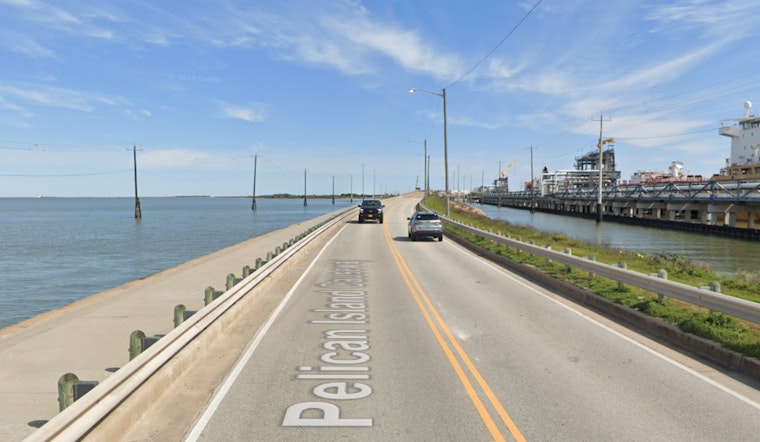
A maritime mishap yesterday morning has left the Pelican Island Bridge in Galveston, Texas, battered and resulted in an oil spill that prompted immediate closures. A barge, which has not been identified in terms of ownership or cargo, slammed into the vital bridge structure at approximately 9:30 a.m., causing a significant section of the bridge to collapse and sending an unknown quantity of oil into the surrounding waters.
Emergency crews, including representatives from the Galveston’s Office of Emergency Management, the U.S. Coast Guard, and Texas Department of Transportation, rushed to the scene to assess and contain the damage. According to KPRC, the intercoastal waterway was closed as a result of the spill, which poses a significant threat to the local ecosystem. The extent of the closure and the volume of spilled oil, as of now, remains unknown.
The Texas Department of Transportation and city officials are reportedly working together to evaluate the bridge’s integrity and determine when, or if, it can be safely reopened. Meanwhile, Texas A&M University at Galveston, which has a stake in the area's infrastructure due to its proximity, has confirmed that while electricity was restored, the bridge remains impassable.
No injuries have been reported by the authorities, something of a silver lining in an incident that echoes past tragedies. Local motorists remember, with a shudder, the bridge collapses in Baltimore and Port Isabel that claimed lives and reminded us all of the frailties in our intertwined lives of concrete and water. However, authorities are still piecing together the details that led to the barge striking the bridge, leaving residents and experts alike to ponder the vulnerabilities that linger in the shadows of our coastal infrastructure.
As cleanup and assessment continue, traffic around Harborside Drive is being rerouted, with northward turns towards Pelican Island from 51st and Harborside being nixed, as noted by city officials. The collective efforts to contain the oil spill before it can wreak further havoc on the environment are a testament to the responsiveness and resolve of Galveston’s first responders and the various agencies on the scene.



