

























































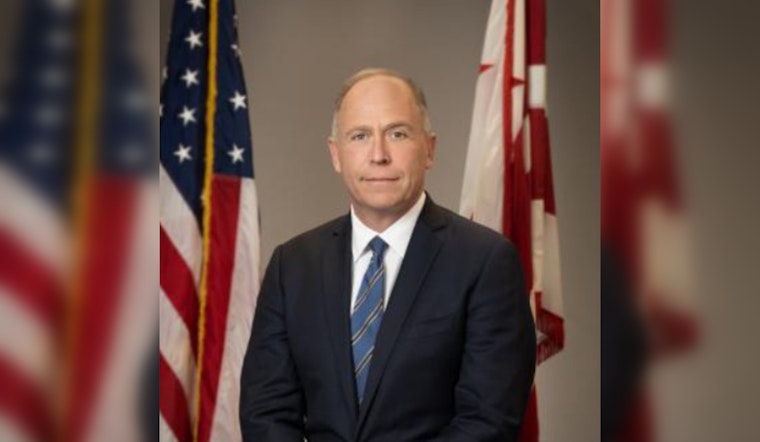
In a notable show of unity, Attorney General Brian L. Schwalb has rallied a cohort of 11 attorneys general, urging the Supreme Court to carefully consider the rare admission of prosecutorial missteps in a longstanding capital case. The coalition, standing behind Oklahoma's top lawyer, is pushing for the high court to acknowledge the singular significance of an attorney general's backing of a new trial.
"An attorney general's confession of error in any criminal prosecution is extraordinarily rare," Schwalb emphasized. According to a statement from his office, Oklahoma Attorney General Drummond's acknowledgment of flawed proceedings that led to Richard Glossip's death row conviction not only displays an admirable commitment to justice but also underscores the crucial role of the state's top legal officers in safeguarding constitutional rights.
Richard Glossip, sentenced to death in 2004 for a murder back in 1997, has weathered a storm of legal battles. Recent investigations unveiled a series of errors in his conviction, prompting Attorney General Drummond to make the exceptionally unusual move and admit these faults. Despite Oklahoma's request for a new trial after the confession, the Oklahoma Court of Criminal Appeals turned it down, prompting the case's escalation to the US Supreme Court, set for review later this year.
The united front of attorneys general, as voiced by Schwalb, presents an argument steeped in constitutional duty. These chief law officers bear the responsibility to uphold and defend the principles set forth within the constitution—a task that should, as in Glossip's fraught case, include the power to acknowledge when a trial has strayed from its just path. In their joint plea, the coalition argues that the nation's highest court should carefully consider Drummond's unusual but serious confession.





-4.webp?w=160&h=400&fit=crop&crop=edges)

