

























































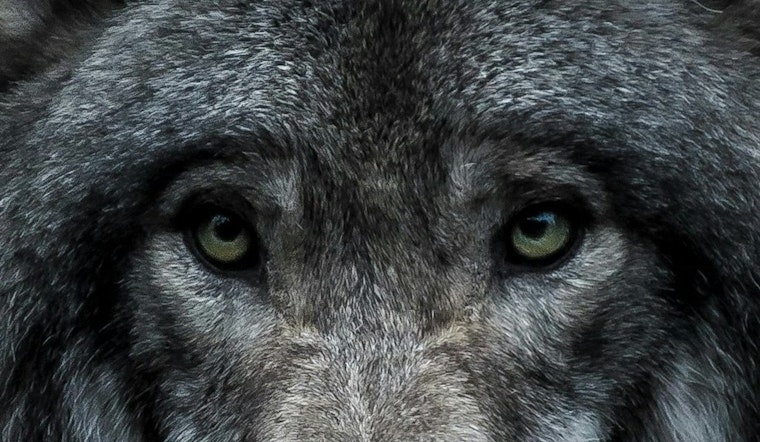
When Dr. Zsófia Virányi took the stage at San Francisco State University's Canine Science Symposium earlier this month, she brought with her years of insights from bottle-feeding wolves and dogs from just over a week old. The Austrian ethologist and founder of the Wolf Science Center had a stark message for the Bay Area audience: the transformation of wolves into dogs remains one of science's most perplexing puzzles, especially relevant to San Francisco—one of the most dog-friendly cities in the world.
"You can leave a piece of meat on a table and tell one of our dogs, 'No!' and he will not take it," Virányi explained, according to Scientific American. "But the wolves ignore you. They'll look you in the eye and grab the meat." That fundamental difference—a dog's acceptance of human authority versus a wolf's independence—lies at the heart of domestication. Yet how ancient humans achieved this transformation remains hotly debated, even as scientists have successfully traced the origins of nearly every other domesticated species.
The annual Canine Science Symposium, which has been held at SFSU since its founding in San Francisco in 2013, regularly brings cutting-edge research to local audiences. According to Bay Woof, the 2024 conference featured Virányi as a plenary speaker alongside 14 other nationally and internationally recognized scientists discussing the latest findings in canine behavior, training, sheltering, and welfare.
The Ancient Mystery Takes New Form
Recent breakthroughs have fundamentally reshaped our understanding of canine origins. Contrary to long-held beliefs, modern dogs don't descend from today's gray wolves. Instead, both species are "sister taxa," descended from an unknown and now-extinct wolf ancestor, according to research published in Scientific American.
This discovery came from analyzing whole genomes of living dogs and wolves, which revealed that centuries of interbreeding between the two species had produced misleading signals in earlier studies. The two species share 99.9 percent of their DNA, and hybridization continues today—wolves with black coats got that gene from dogs, and in Georgia's Caucasus Mountains, shepherd dogs mate so frequently with local wolves that 2 to 3 percent of sampled animals are first-generation hybrids.
When and Where Remain Contested
The timeline and location of domestication have proved equally contentious. Early genetic studies in 1997 suggested dogs were domesticated 135,000 years ago, as reported by Scientific American. Later research pointed to southern China less than 16,300 years ago. A 2013 study argued for Europe between 32,000 and 19,000 years ago.
"You can't solve this problem by using modern animals alone as windows to the past," says evolutionary biologist Greger Larson of the University of Oxford, who's leading a major international research project, according to Scientific American. Modern dog DNA has been scrambled by thousands of years of human migration and breeding, obscuring regional signatures that might reveal where domestication began. Adding to the complexity, wolves had "a ridiculously broad distribution across the world," making it far harder to pinpoint their transformation than for animals like sheep or chickens with smaller native ranges.
One thing is now certain: dogs became domesticated while humans were still hunter-gatherers, not after the agricultural revolution. Recent DNA studies place the event between 32,000 and 18,800 years ago, thousands of years before farming began roughly 12,000 years ago in the Middle East.
Did Wolves Domesticate Themselves?
The mechanics of how wolves became dogs have sparked intense scientific debate. Most researchers once assumed ancient humans selectively bred docile wolves, but a competing hypothesis suggests wolves essentially domesticated themselves by naturally selecting for tameness to access food from human settlements.
A major objection to this "self-domestication" theory has been whether evolution by natural selection could occur quickly enough. But groundbreaking research published in February 2025 in the Proceedings of the Royal Society B used agent-based computer modeling to demonstrate that the process could have happened in as little as 8,000 years. According to Phys.org, this finding "strongly suggests that the idea of self-domestication could explain how modern dogs came to exist."
The timing of this research—published just months before this article—provides fresh scientific support for a theory that had long been questioned on mathematical grounds. The alternative scenario—humans raiding wolf dens to steal pups for taming—would have been extraordinarily dangerous. "We didn't do [domestication] deliberately; not at first," Larson theorizes, according to Scientific American. Instead, wolves likely started following humans for the same reason ants trail into kitchens: to exploit a nutritional resource. Over time, camp-following wolves lost their fear of people, and vice versa, and a mutually beneficial relationship developed.
The Dark Origins at Předmostí
Not all early human-canid relationships were warm and fuzzy. At Předmostí, a roughly 27,000-year-old Czech settlement, archaeologists discovered canid skulls with shorter snouts, broader braincases, and crowded teeth—the first anatomical signs of domestication, similar to changes seen in selectively bred silver foxes.
But these "Paleolithic dogs" weren't living as pampered companions, according to paleontologist Mietje Germonpré of the Royal Belgian Institute of Natural Sciences, as quoted in Scientific American. Isotopic analysis shows they weren't eating mammoth meat like the humans but rather second-rate reindeer. They had broken teeth and severe facial injuries, many of which had healed—signs that could indicate fighting with other dogs or being beaten with sticks.
The mammoth bones at Předmostí show no signs of being gnawed by canids, suggesting these animals weren't free to roam and scavenge. Rather, humans probably tied them up, fed them inferior food, and even bred them—all to ensure a ready supply of victims for ritualistic sacrifices. "Confined, beaten, fed a restricted diet, the dogs at Předmostí would likely have understood the meaning of 'No!'" the article notes. "There is no evidence at Předmostí or other comparably old sites where dog remains have been uncovered that the ancient hunter-gatherers there regarded the canines as their friends, companions or hunting pals. That relationship came later."
When Dogs Became Beloved
The earliest undisputed dog on record tells a very different story. A 14,000-year-old specimen from Bonn-Oberkassel in Germany was found interred in a grave with a man about 50 years old and a woman about 20 to 25, according to Scientific American. When researchers see such associations, they know they're looking at a fully domesticated animal—one treasured and regarded so highly that it received burial as if it were a member of its human family.
At Ain Mallaha, a 12,000-year-old hunter-gatherer site in Israel's upper Jordan Valley, archaeologists discovered perhaps the most famous dog-human burial. The skeleton of an elderly person lies curled on its right side, its left arm stretched out under the head, with the hand resting gently on a puppy. The dog was about four to five months old and was placed there to be a companion to the deceased.
This shift in attitude had a profound effect on dogs' evolution. "Dog burials happen after hunting moves away from the open plains and into dense forests," says Angela Perri, a zooarchaeologist at the Max Planck Institute for Evolutionary Anthropology, as quoted in Scientific American. Beginning at least 15,000 years ago, hunter-gatherers in Europe, Asia and the Americas began depending on their dogs' hunting skills for survival. "Good hunting dogs can find fresh tracks, and guide the hunters to the prey, and hold them at bay," Perri explains.
One of the most elaborate dog burials comes from Skateholm, Sweden, dated to about 7,000 years ago. One dog was given the finest treatment of anyone there, human or dog—laid on its side, with flint chips scattered at its waist, red deer antlers and a carved stone hammer placed with it, and sprinkled with red ocher, according to Scientific American.
The Fall and Rise Again
The dog's status plunged when people developed farming. In early agricultural settlements, dog burials are rare. "The difference is so strong," Perri says, according to Scientific American. "When people are living as hunter-gatherers, there are tons of dog burials." But as agriculture spreads, the burials end. "Dogs are no longer as useful." In many places, they even began to turn up on the dinner table.
Not all agricultural cultures consigned dogs to such a fate. Among groups that tended livestock, dogs were sometimes bred for herding. In 2006, archaeologists discovered 80 mummified dogs buried in graves next to their human owners at a 1,000-year-old cemetery near Lima, Peru. The dogs had protected the Chiribaya people's llamas and, in return for their service, were well treated in life and death—nearly 30 were wrapped in finely woven llama-wool blankets, with llama and fish bones set close to their mouths.
The Modern Quest for Answers
The comprehensive research project led by Greger Larson aims to finally solve the domestication puzzle. The team is using geometric morphometrics—a technique for quantifying traits like skull curves—and analyzing DNA from thousands of modern and ancient dog and wolf samples from around the globe. When they're finished, they expect to be very close to knowing when and where wolves first began down the path toward becoming our trusted companions, according to Scientific American.
For San Francisco dog lovers who've attended the Canine Science Symposium at SFSU over the years, these findings illuminate the remarkable journey that brought wolves from independent predators to the companions sleeping on our couches. But one question still eludes even the most dedicated researchers: How did ancient humans—or ancient wolves—achieve the transformation from a creature that ignores "No!" to one that respects it?
As Virányi wonders at the Wolf Science Center, watching her hand-raised wolves and dogs interact with their human handlers in fundamentally different ways: "I try to imagine how they did it, and I really can't."




