

























































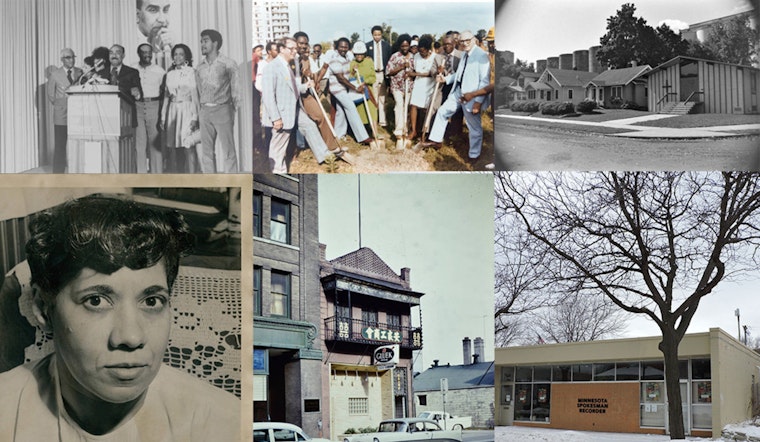
The City of Minneapolis is on the lookout for individuals with expertise in African American history for its newest advisory team, the African American Heritage Work Group. The city extended the application deadline to May 31, giving more time for community members to get involved in this important initiative, as per the Minneapolis City of Lakes. The group's primary role will be to guide the City Council in acknowledging and preserving the cultural tapestry and historical contributions of African Americans within the city.
Comprising up to 15 members, the workgroup will include 13 individuals appointed by council members and two selected by the mayor. They will have their hands on the pulse of the city's Black history, identifying 25 key properties for the Minneapolis African American Historic and Cultural Context Study. Out of the properties surveyed, a minimum of three will be put forward for a spot in the National Register of Historic Places.
"We look forward to working with community members to recognize and uplift important people, places, and events related to African American heritage," Senior City Planner Erin Que told Minneapolis City of Lakes. This inclusion of community voices is touted as crucial for an authentic and comprehensive recounting of Minneapolis's history, and the new project is set to cast a light on the city's cultural diversity.
Scheduled from July 2024 to June 2025, the African American Heritage Work Group will convene every one or two months. These gatherings, organized by City staff and open to the public, will be a forum for proposing research materials, advising on survey properties, reviewing draft reports, and recommending future initiatives. After the work group disbands, a summary report detailing their findings and proposals will be presented to the City Council.
While Minneapolis has been home to a historic preservation program since 1972, with more than 200 landmarks and historic districts designated to date, the narrative thus far has predominantly reflected the city's white heritage. A disparity is that around 20% of Minneapolis residents identify as Black or African American, according to the Minneapolis City of Lakes. With this new group, the city acknowledges the need for broader representation and plans to expand its historic preservation efforts to inclusively represent its diverse populace.





