

























































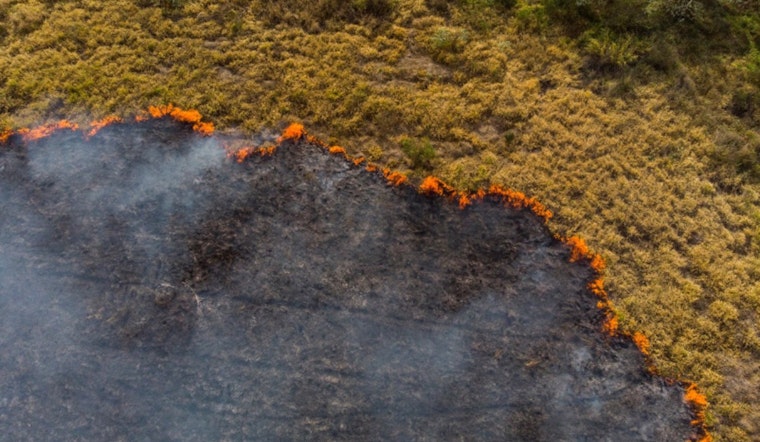
With wildfire season looming, Oregon's Governor Tina Kotek alongside a team of state officials rolled out a comprehensive guide on how the Beaver State gears up to face the flames. According to a recent briefing, Kotek emphasized preparedness in the face of climate-induced challenges, saying, "Wildfires will forever impact our state and our nation. The threats will continue to grow as we grapple with hotter, drier conditions due to climate change."
Projected to ride on the heels of favorable winter moisture and a robust snowpack which has led to a reduced drought intensity across much of Oregon, the fire season is expected to pack an average punch in May and June. However, Kotek and her team have warned of tougher months ahead with July and August set to sizzle, particularly in northeastern and southeastern parts of the state. Officials anticipate that, aggravated by wind events, these conditions may evolve into more complex and challenging wildfire scenarios.
In anticipation, Oregon's firefighting strategy bolsters an aggressive initial attack backed by early detection methods. Oregon Department of Forestry (ODF) Director Cal Mukumoto told the press that ODF’s jurisdiction covers 16 million acres of land and touted a system designed for 'complete and coordinated' battle against wildfires. Supporting this network, over 700 permanent and seasonal firefighters stand ready with a fleet including more than 300 engines, and aviation assets for which they collaborate with the Oregon Military Department.
Clearly not resting on their laurels, state agencies are pumping up defenses with fresh tech and brainpower learned from last year’s burns. They have been working on improving monitoring network coverage, streamlining communication for smoke coordination, and refining tools for pinpointing air quality issues, Governor Kotek's office revealed. With these tools and new fire engines already deployed and more en route, Mariana Ruiz-Temple from the Oregon State Fire Marshal (OSFM) boasts that Oregon is in a 'great spot to protect our communities from wildfire.'
Fanning these precautionary flames, the OSFM's Community Wildfire Risk Reduction Unit has fueled local resiliency with funding for wildfire defense in neighborhoods. Highlights from the off-season reveal over 1,285 defensible space assessments aimed at shielding homes and cities from the claws of rampant wildfires. Proactive measures have clearly taken the center stage as every Oregonian is urged to batten down the hatches in preparation for the dry spell ahead.





