

























































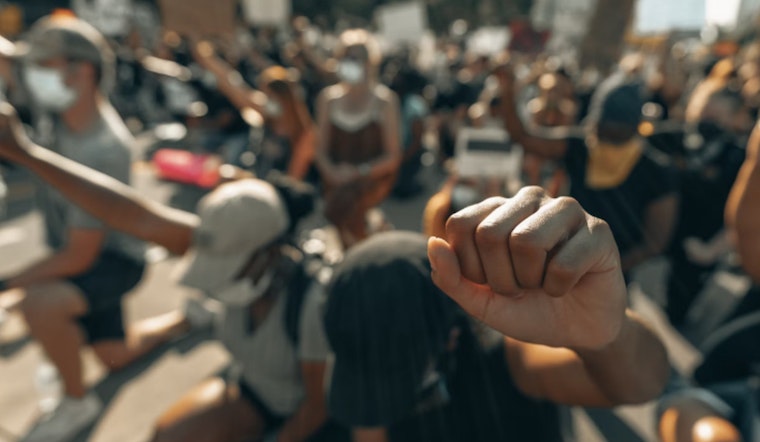
As student protests continue to unfold across the nation's campuses, the echo of a familiar accusation rings out — "outside agitators." College and law enforcement officials are recycling this phrase, history shows, to delegitimize and dismiss the actual grievances of protesters. According to WABE, this isn't a new tactic. It's been a refrain throughout movements like the Civil Rights era and Black Lives Matter, providing a scapegoat for institutions looking to deflect internal criticism.
The term has been wielded historically as a tool to discredit civil rights and protest movements. For example, during the 1960s, politicians questioned the origin of actions like the "Appeal for Human Rights" ads, which were published by Black students in Atlanta. Georgia Gov. Ernest Vandiver went so far as to suggest the ads were foreign efforts "to breed dissatisfaction, discontent, discord and evil," WABE noted. Likewise, in 2024, New York City Mayor Eric Adams referenced "outside agitators" when justifying police intervention in Columbia University's pro-Palestinian protests, though specifics on the agitators' impact were scant.
This dismissal of local dissent and solidarity with nationwide movements works, experts say, to minimize legitimate opposition. Yet protestors maintain that while demonstrations may draw varied attendance, the leadership and motivation remain genuine and homegrown. "It delegitimizes internal dissent against the status quo. So anyone who speaks up against the status quo, whatever that is, is by definition an outsider," author and historian Dylan C. Penningroth told WABE.
Protests against the Israel-Hamas conflict have been notable in this regard, with claims of outside agitation surfacing in several institutions. At the University of Virginia, law enforcement claimed outsiders had "bull horns to direct the protesters on how to flank our officers," Virginia Attorney General Jason Miyares told WABE. Yet, data from the Associated Press reveals that most of those arrested in connection with these protests were in fact local with state-issued identifications. In the thick of the action, Mayor Adams cited radical attempts to influence young minds as a rationale for police action.
Still, suspicions around the so-called outsiders have been challenged. The baseless claim by Mayor Adams, that the wife of an “agitator” was involved in terrorism, was disproven when Nahla Al-Arian, the woman in question, clarified she was not even present in Columbia that week, nor had she been arrested, according to WABE. This narrative draws attention to the need for scrutiny regarding the "outside agitator" narrative. "While it’s true that people with nefarious intentions crash protests, it’s the exception rather than the rule," said Shanelle Matthews, a CUNY professor and former communications director for the Movement for Black Lives, as per WABE.




