

























































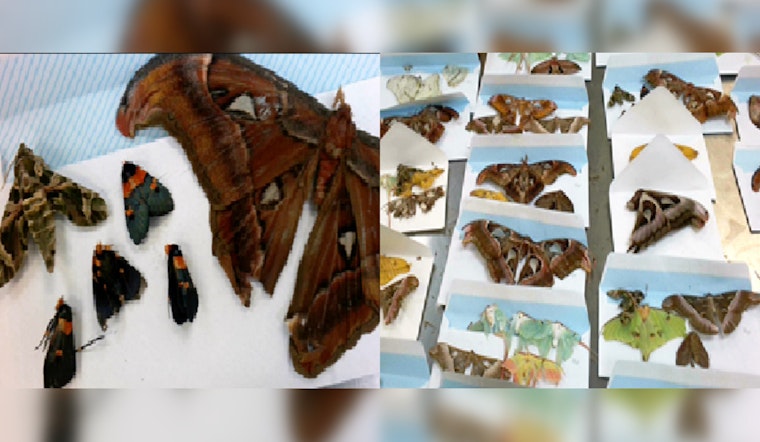
A shipment from overseas fluttered onto the radar of U.S. Customs and Border Protection agriculture specialists early this month, but not in a way anyone would expect. Officials snagged a package containing 60 dead moths and butterflies that were being smuggled into the country, violating wildlife import laws, all under the guise of "pieces of silk to be used in works." The concealed contraband was initially inspected on May 2 and earmarked as suspicious, according to a statement by the CBP.
Manifesting the intentions as innocent craft supplies, when the package eagerly waited for its entry into Wayne County, Pa., from Portugal, the shipment actually harbored an illegal collection of deceased Lepidoptera, a fancy term for butterflies and moths. In a lapse of judgment, the senders perhaps overlooked the detail that these specimens fall under the strict regulations of wildlife importation enforced by the U.S. Fish and Wildlife Service (USFWS).
After detaining the package, CBP officials, trained in agricultural inspection and biological sciences, handed over the evidence to USFWS inspectors on May 3. The lack of proper documentation, such as import certifications or invoices, could have sent the intended recipient into a metamorphosis of legal trouble. Without declaring the scientific names or purpose of the shipment, it appears the senders were playing cocoon and dagger with U.S. import laws.
In a figurative sense, these agriculture specialists serve as the nation's first line of defense against invasive species and diseases that could wreak havoc on our agriculture and economy. As per a CBP report, on a typical day, they intercept hundreds of insect pests and seize thousands of prohibited agricultural items nationwide. However, butterflies are the last thing you'd expect to cause a flap in security measures, highlighting the unexpected challenges these specialists encounter.
Tater Ortiz, CBP’s Area Port Director for the Area Port of Philadelphia, pointed to the critical nature of their mission, stating, “Customs and Border Protection agriculture specialists have a very challenging and critical mission, and that is to protect our vital agricultural resources against the accidental or deliberate introduction of invasive insect pests, and plant and animal diseases that could harm our nation’s economic vitality,” according to the CBP report. Indeed, when it comes to protecting our borders from ecological threats, these specialists prove you can't just wing it.





