

























































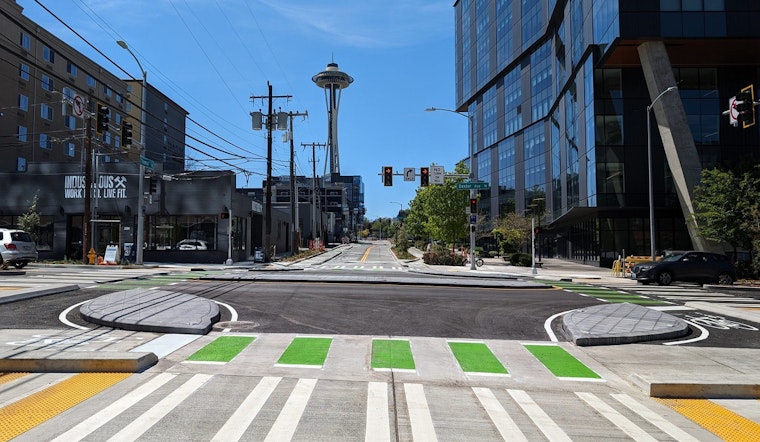
Seattle's streets just got a major safety upgrade with the opening of the city's first protected intersection at Thomas St and Dexter Ave N in South Lake Union. Following recommendations from the National Association of City Transportation Officials, this modern design is set to boost visibility and cut down on turning conflicts, a boon for bikers and pedestrians in the bustling neighborhood.
In a development that benefits folks on two wheels or none, the newly minted intersection has taken strides to prioritize pedestrians and cyclists. Among the new features, as detailed on the Seattle Department of Transportation (SDOT) blog, are traffic signals tailored to those crossing Dexter Ave N and permanent concrete barriers separating them from motor vehicles. With a survey in San Francisco revealing that these designs result in 96% of drivers yielding to bikers, Seattle's project promises similar safety benefits.
This intersection doesn't only aim to protect; it connects. Linking the greenway on Thomas St with the Dexter Ave N bike lanes, it forges a vital artery in the city's bike network and provides a corridor for Seattle Center's event-flocking crowds to move smoothly through South Lake Union. Moreover, the installment of corner islands, the SDOT blog says, has the happy side-effect of taming traffic and inducing safer speeds for drivers negotiating turns.
Despite the comprehensive cyclist and pedestrian accommodations, the intersection maintains its simplicity for drivers. Signs and markings guide them through their paces, with no significant impact on travel time reported. Even with pedestrian and cycling signals added into the mix, according to the SDOT blog, "Driving through the intersection is still simple and intuitive." It seems the intersection's design has struck a harmonious balance between the needs of all its users, ensuring no one mode of transportation is placed over another.
Post-launch, SDOT plans to keep a close eye on the intersection's performance and adjust signals as needed. This new protected intersection represents a significant step toward a safer and more integrated urban transit experience for everyone in Seattle—whether they're walking, cycling, or driving.





