

























































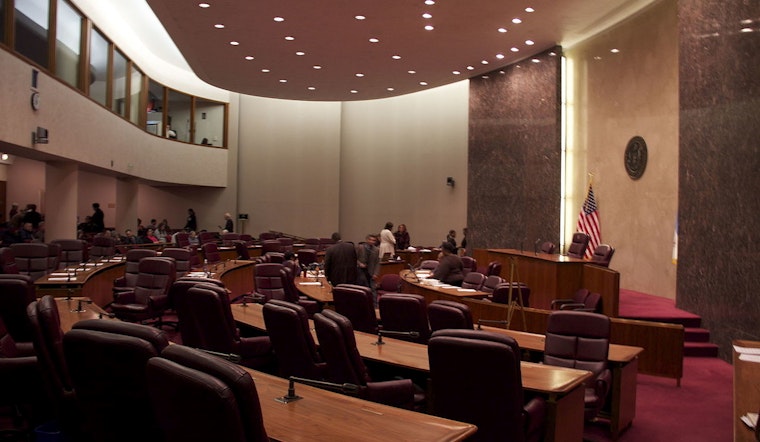
The Chicago City Council is pressing forward with scrutinizing Mayor Brandon Johnson's administration's accelerated plans to allocate pandemic relief funding before an impending deadline. According to a Chicago Sun-Times report, the council raised questions regarding the urgency and methodology of the spending, focusing on integrating approximately $345 million in unspent federal funds into community initiatives.
Hastening to distribute the unexpended portion of the nearly $1.9 billion received under former Mayor Lori Lightfoot's tenure, Johnson's administration appears to handle the challenge before the year-end budgeting deadline, with the total expenditure mandated by the end of 2026. Before Johnson's office took over, about 89% of the federal funds were budgeted, with 82% spent, as detailed by officials in late May. Despite facing a rapidly ticking clock, Budget Director Annette Guzman showed confidence by stating "We're going to use this money to lift up communities," as she previously informed WTTW News.
Division among the council on investment strategies surfaced, with Ald. Bill Conway (34th) advocating for prioritizing the city’s long-term fiscal health over short-term infusion to community groups, which carries the possibility of "pulling the rug out from under them in three years," he warned in a statement obtained by the Sun-Times. Amidst the deliberations, potential adjustments to program funding were discussed, with over $80 million shifted as the administration reevaluates continued funding streams.
Significant developments included a $31.5 million provision to expand the guaranteed income pilot, providing $500 monthly to low-income residents, and further building out CARE Alternate Response teams. This move has seen deployment in six districts and assisted nearly 1,400 individuals with minimal incidents of arrest and use of force. An outpour from individuals who benefited from the no-strings-attached income echoed gratitude. Rosazlia Grillier, an involved community organizer, told the Sun-Times, "It allowed me to live outside of the extreme poverty that I was experiencing before the pilot."
Despite these positive notes, challenges remain, with a national shortage gnawing away at the goal of expanding public health services. Dr. Simbo Ige, the public health commissioner, conveyed to council members the difficulty precipitated by recruitment constraints, as mentioned in the Sun-Times interview. Other anticipated programs, such as a sobering center and a low-barrier shelter, were canceled due to failure to secure administrators by the year's end.
Mayor Johnson, in his vision to revive the city with these funds, especially in communities hardest hit by the pandemic, has restructured the spending plan. Guzman, leading the charge, has claimed a wholesale overhaul of the program delivery system, introducing a centralized system to streamline processes and prevent bureaucratic delays, equipping city departments to operate more effectively. The city's response has been to round out an assertive fiscal policy with humane consideration, aiming to mend the social infrastructures as fundamentally as the fiscal ones.





