

























































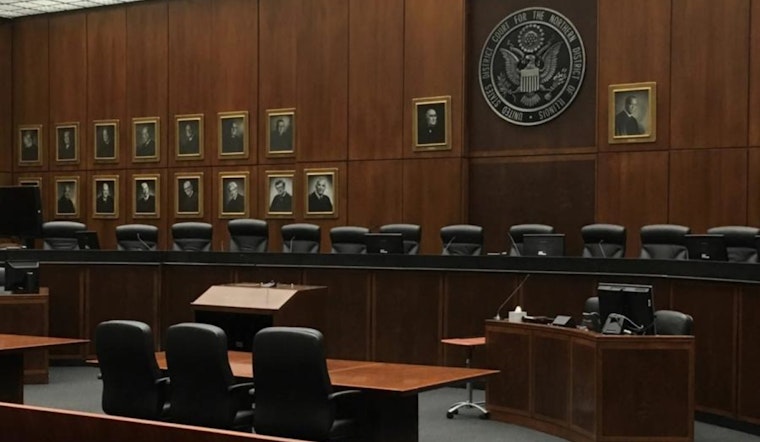
Two Chicago men are facing severe legal repercussions following an indictment on federal racketeering charges connected to the alleged murder of a teenager. Gary Roberson, 40, and Joseph Matos, 41, have been accused of killing 19-year-old Chrys Carvajal to further their status within the Milwaukee Kings street gang. The indictment, containing both racketeering and firearm offenses, was unveiled in U.S. District Court in Chicago last Thursday. As detailed by the U.S. Attorney's Office for the Northern District of Illinois, the incident took place on July 3, 2021, in the Belmont Cragin neighborhood, which lies on Chicago’s Northwest Side.
The charges suggest a grim scenario where the Milwaukee Kings, described as a criminal organization, have engaged in drug trafficking and acts of violence including murder and an assault, in pursuit of preserving their claimed territory on the North Side of Chicago. Members have allegedly intimidated others, including rival gang members and witnesses, and have utilized social media to boast about gang-related activities while attempting to fly under the radar of law enforcement. Currently, Roberson has pleaded not guilty and remains in federal custody, while Matos remains at large, with a warrant out for his arrest.
The investigation leading to these charges has been a collaborative effort involving the FBI and the Chicago Police Department, alongside federal attorneys. Representing the government are Assistant U.S. Attorneys Prashant Kolluri, Caitlin Walgamuth, and Kirsten Moran. Their collective efforts are poised to bring the accused to justice, keeping in mind that the indictment itself is not an indication of guilt. Both defendants have assured the presumption of innocence until proven otherwise in a trial where the burden of proof weighs on the government's shoulders.
The potential consequences of these racketeering charges are severe. Murder in aid of racketeering can result in a mandatory life sentence or even the death penalty. As the case moves towards trial, the judicial system is tasked with the duty to impose sentences that are aligned with federal statutes and the U.S. Sentencing Guidelines. The final judgment on the case will ultimately set a precedent for how violent gang-related crimes are punished under the federal law.





