

























































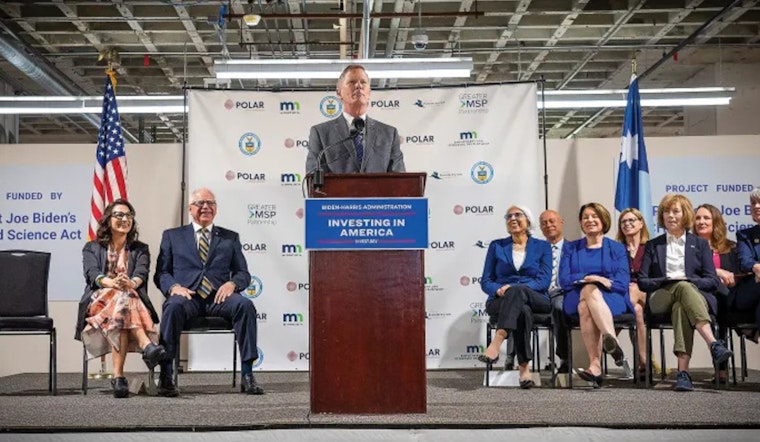
Bloomington is cementing its position as a hub for technological innovation, with Polar Semiconductor leading the charge in tapping into federal and state funds to enhance its manufacturing capabilities. The company's latest venture, fueled by a combination of government and private investment, promises to inject vitality into the local semiconductor sector and, consequently, the broader economy.
With $120 million sourced from the landmark U.S. CHIPS and Science Act and an additional $75 million from the Minnesota Forward Fund, Polar Semiconductor aims to channel a hefty $525 million into its Bloomington operations. These financial maneuvers are viewed as strategic leverage by the city, set to accelerate growth in a key industry that's intimately tied to the nation's technological sovereignty. This expansion plan, as detailed on Bloomington's official website, underscores a journey towards not just nurturing innovation, but actively sculpting its trajectory.
The CHIPS and Science Act—a bipartisan $53 billion federal initiative—has been a catalyst for such progress, with Polar Semiconductor reaping the first award in Minnesota. Concurrently, the state's contribution via the Minnesota Forward Fund stems from a commitment by Governor Tim Walz to prop up business growth through a $400 million investment strategy, facilitated by the Department of Employment and Economic Development (DEED).
Polar Semiconductor's president and COO, Surya Iyer, expressed gratitude towards both the federal and state levels of support. "Polar and its employees are grateful to the U.S. Department of Commerce and the State of Minnesota for their commitment to the future of American semiconductor manufacturing and appreciate the strong collaboration with the CHIPS Program Office, DEED and the City of Bloomington, Minnesota, throughout this process," Iyer conveyed in remarks sourced from Bloomington's news release.



