

























































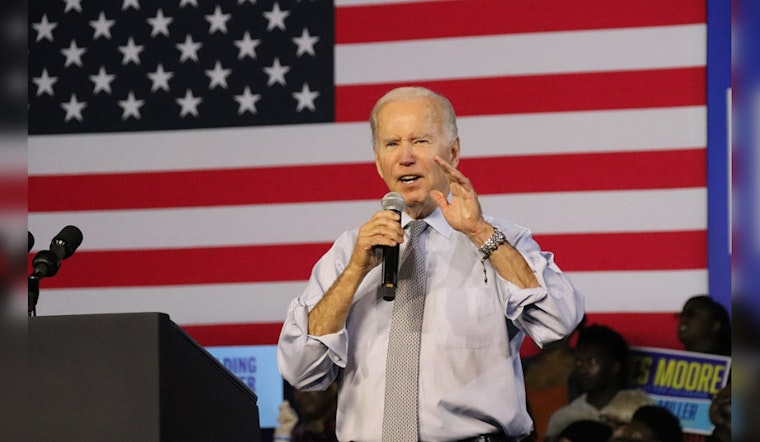
Amidst sky-high migrant encounters at the U.S.-Mexico border, President Joe Biden is poised to tighten the throttles with an executive order that aims to curtail the inflow of asylum seekers. According to Concho Valley Homepage, the executive action permits temporary closures of the border outside legal ports of entry when unauthorized crossings exceed a certain threshold — a measure that could snap into effect immediately given current crossing numbers outpace the stated limits. This move comes just days after a historic election in Mexico, ushering in a first female president.
Law enforcement officials who operate on the nation's frontlines have mixed opinions on the potential efficacy of such restrictions. Maverick County Sheriff Tom Schmerberexpressed a cautious stance in an interview with FOX San Antonio, saying "Now it's a little slow. Well slow on the on the area where we have the two ports of entry." On the other spectrum, Zavala County Sheriff Eusevio Salinas suggested that tightening asylum access might indirectly boost crossings, stating, "It might even increase it if they restrict the numbers, because people are still wanting to come into the country."
The specifics of the executive order, as described by senior administration officials to NewsNation, lay out a cutoff: the border would shutter to migrants after daily encounters average 2,500 and would not reopen until that average descends below 1,500. In April alone, Customs and Border Protection reported 179,725 encounters, computing to a daily average far beyond the executive order's stipulated ceiling — suggesting the order's parameters are already exceeded.
While anticipated actions reflect the federal government's attempt at a firm response to a complex crisis, local authorities and communities are divided over the prospective outcomes. Kinney County Sheriff Brad Coe opined to FOX San Antonio, remarking that "I really don't think it's gonna make much difference. Things are about 75% you know, down about 75% from what we had last year." However, Texas and Southwest Border Sheriff's Coalition Executive Director Clint McDonald highlighted the unpredictable aftereffects of decision making in the political echelons, saying, "We never know what's going to happen or the collateral damage that'll come from decision made in Washington DC about the lives of the people who live on the border, and that's both sides of this border."
Across the aisle, opinions are equally fraught with concern and criticism. Some progressives, such as Jennie Murray, the president and CEO of National Immigration Forum, deem the executive order little more than a "Band-Aid" on a persisting wound. Murray told NewsNation, "We don’t need to see anything else being compounded down there, and an executive order. While it looks on the surface as if it would be a solution, it will compound the issue, we will have more of the asylum seekers, you know, backed up." Meanwhile, Republican officials like House Speaker Mike Johnson denounce the administration's tardiness in tackling border issues, dubbing it "too little too late now."





.jpg)