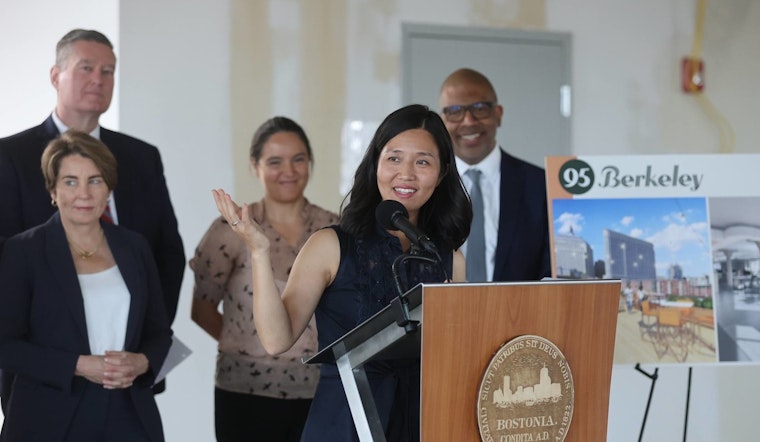
In a move to address housing shortages, San Francisco Mayor London Breed has followed suit after Boston's Mayor, Michelle Wu, extended their Office to Residential Conversion Program in a partnership with the state government. The initiative, which encourages the redevelopment of empty or underutilized office spaces into residential units, is intended to bolster housing availability in urban areas grappling with an increasing demand for affordable living spaces.
The Boston program, which received a financial backing of $15 million from the Massachusetts state government, sets out to incentivize the transformation of commercial buildings into housing, especially larger and more complex projects. The funding is substantial, offering up to $215,000 per affordable housing unit, with a ceiling of $4 million per development, as stated in a release on Boston's official government website. Since its inception in October 2023, the initiative has already approved the creation of 412 housing units across 13 buildings, effectively converting 403,000 square feet of office space to residential use.
The trend of converting office spaces into homes isn't new, but it has gained increased urgency in post-pandemic times as remote work models lessen the need for extensive commercial office space. Mayor Wu emphasized the goal of the program, "As we work to make Boston a home for everyone, our office to residential program will create more housing and more affordability in Boston," and acknowledged the significance of state involvement, "This investment from the State will support our efforts to incentivize lenders, property owners, and downtown stakeholders to increase housing production in our downtown area," according to the Boston government website.
The extended Massachusetts program has a deadline running through December 31, 2025, prioritizing projects ready for prompt action and construction. Arthur Jemison, Chief of Planning for the City of Boston, remarked, "This infusion of funding will significantly bolster, and help us to scale up this program," as stated on the Boston government website. In concert with this strategy, the program includes a Payment In Lieu Of Taxes (PILOT) incentive for developers and optimizes expedited permitting processes to address the urgent needs of the housing market.
This strategic pivot in urban development bears relevance not only to current residents but also sets a proactive stance looking after the future of city life, demonstrating a potential playbook for other cities to emulate. The application for the program remains open until the end of 2025, with the requirement that construction must commence by December 31, 2026, ensuring a swift turnover from office realms to the personal sanctuaries of tomorrow's urban dwellers.