

























































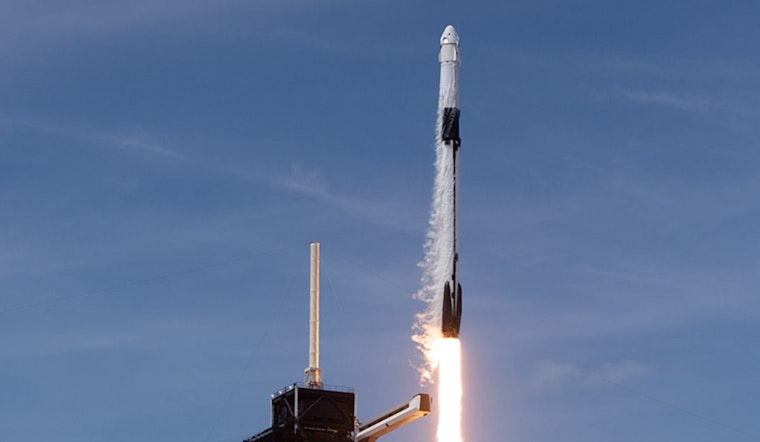
Last night at 8:47 p.m., eyes turned skyward as SpaceX's Falcon 9 rocket, embarking on its 11th mission, pierced the evening firmament from Vandenberg Space Force Base. This marked the company's second launch within the week from the California facility, with the Falcon 9's ascent adding 20 more satellites to the burgeoning Starlink constellation. A sign of modern times, SpaceX's frequent ventures into the cosmos are becoming a regular backlight for the nocturnal tableau, particularly for neighboring Arizona residents.
The launch went as scheduled despite the narrow launch window which had backup slots extending to 12:41 a.m. Monday, and again at 8:22 p.m. Monday night. Acknowledging the reliable performance of the rocket's first stage booster, 12News reported that this particular hardware was on its 11th flight, having served in support of various missions, including the SDA-0A and SARah-2, alongside eight other Starlink ventures. Meanwhile, following the stage separation, the booster charted its return, successfully landing on the "Of Course I Still Love You" droneship stationed in the Pacific Ocean.
The Starlink project, aiming to blanket the Earth with high-speed internet coverage, added satellites with "direct to cell capabilities" amongst the 20 deployed, as noted by KSBY. With over thousands of satellites already in low Earth orbit, Starlink's network positions itself as a vanguard in delivering robust broadband services designed to accommodate streaming, online gaming, and video calls among other bandwidth-intensive activities, as per the project’s website.
Dr. Vishnu Reddy, a scientist from the University of Arizona engaged in space situational awareness, offered further insight into the fascination with these launches. In an interview with 12News, he explained the phenomenon behind the luminous display that graces the Arizonian skies, clarifying that the glowing effect is not solely from the engines. "The sun might have set for us here in Arizona, but it hasn't set in California," Reddy elucidated. "So it's catching that sunlight and reflecting off," thus creating the dramatic visual spectacle against the darkened desert backdrop.



