

























































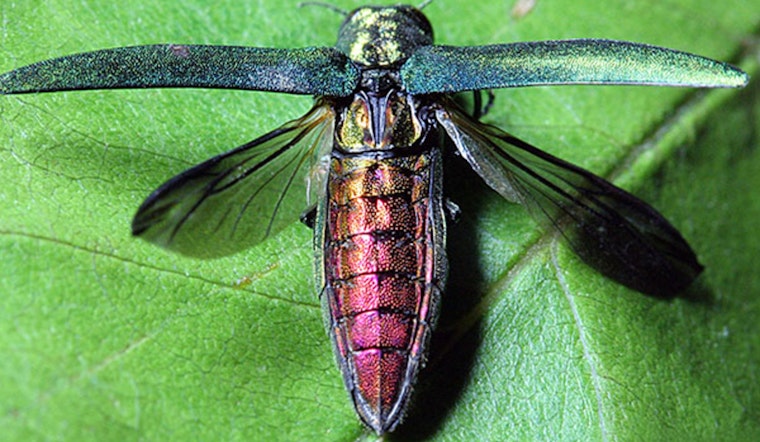
Texas trees are under siege, and the villain is smaller than a penny. The emerald ash borer, an invasive tree-killing beetle, continues its destructive path southward in Texas. According to KXAN, the insect, which doesn't discriminate between healthy or stressed ash trees, has infiltrated 24 counties. Texas A&M AgriLife expert Wizzie Brown expressed concern over the rapid spread, attributing it largely to unsuspecting human helpers who move infested wood materials.
This tiny terror has been setting roots across the state since 2016 when it first surfaced in northeast Texas. The MySA report notes, it's been detected in Grayson, Hill, Hood, McLennan, and Palo Pino counties as of May. Human activity, including the transportation of firewood and nursery trees, accelerates its spread far beyond its natural flight range. Alan Smith, Texas A&M Forest Service's Regional Forest Health Coordinator, lamented the species' reach, stating, "The spread of EAB to these counties is alarming."
The beetle's deadly effect on ash trees results in a near-certain mortality rate within two to five years post-infestation. KXAN warns of the severe impact on urban forests and the benefits they offer, including air purification, water management, and soil maintenance. EAB's unrelenting progression threatens not just the environmental but also the aesthetic and functional value of these critical green spaces.
Preventative measures aim to slow down the beetle's march. Molly Keck, a Texas A&M AgriLife Entomologist, shared with MySA, "Prevention – don't transport firewood." She advises against purchasing firewood from infested areas, signaling a battle that's not only waged in the tree branches, but also in human practices. The Texas A&M Forest Service reinforces these efforts with annual trap deployments to detect and monitor the beetle's spread.
If there's any hope left, it rests on early identification. Once EAB gains ground, it's virtually impossible to reverse its effects. But awareness and responsible behavior could, at the very least, offer Texas ash trees a fighting chance against this diminutive but formidable foe.





