

























































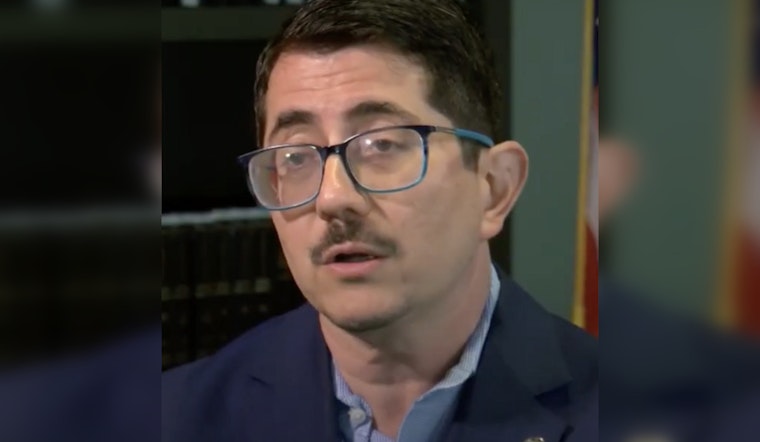
Travis County District Attorney José Garza is wading into the consequential waters of executive power, aiming to undo a gubernatorial act of grace. In a notably rare move, Garza is petitioning the Texas Court of Criminal Appeals to reverse Governor Greg Abbott's pardon of Daniel Perry, a man convicted in the shooting death of Garrett Foster during a 2020 Black Lives Matter demonstration in Austin, as reported by KVUE.
The unexpected twist in Foster's case arrived after a span of three years waiting for trial, offering his family a glimmer of justice for what seemed merely an 18-hour stretch. But swiftly on the heels of the jury's decision, Abbott pardoned Perry, sparking contention over the limits of gubernatorial authority. Garza has now resolved to take action by filing a writ of mandamus, seeking judicial intervention to restore what he argues is the integrity of the judicial process, based on information from CBS Austin.
Confronting the governor's decision, Garza's efforts face the inherent challenges embedded in the broad discretion traditionally granted to the executive branch. Legal experts, such as Texas attorney Quentin Brogdon, express skepticism about the reversal's likelihood, observing the absence of conventional paths to challenge a governor's pardon barring evidence of corrupt intent, as outlined by CBS Austin. Despite these low odds, Garza persists, signaling a valiant if not uphill legal battle over the interpretation of the Texas Constitution's assignment of pardoning power.
Adding a human dimension to the legal proceedings, Sheila Foster, Garrett's mother, ardently condemned the pardon. "We had justice for Garrett for 18 hours after waiting three years for a trial," Foster told KVUE. "And the very next day, the governor announced his plans to pardon, and now here we are." This sentiment echoes the concerns raised by Whitney Mitchell, Foster's fiancée, who lamented the loss of "the love of [her] life" and criticized the governor's move as a disregard for the verdict delivered by "12 impartial Texans."
With a writ of mandamus now tabled, the Texas Court of Criminal Appeals wields the power to summon arguments from both sides. Should they find Garza's argument compelling enough to merit a closer look, a fresh judicial discourse could unfold, bearing the potential to redefine the boundaries of Texas's executive clemency. Nonetheless, Daniel Perry's attorney, Clint Broden, dismisses the effort as a political performance, an unnecessary expenditure of taxpayer money that trifles with the state's legal principles, as he articulated to CBS Austin.
As Texas stands at this crossroads, the principles of justice as perceived by a grieving family and the discretionary boundaries of a governor's pardon power are now under the judiciary's scrutiny. The court's forthcoming decision, anticipated with bated breath by all parties involved, promises to underscore the enduring debate over where the balance of power lies within the Lone Star State.





