

























































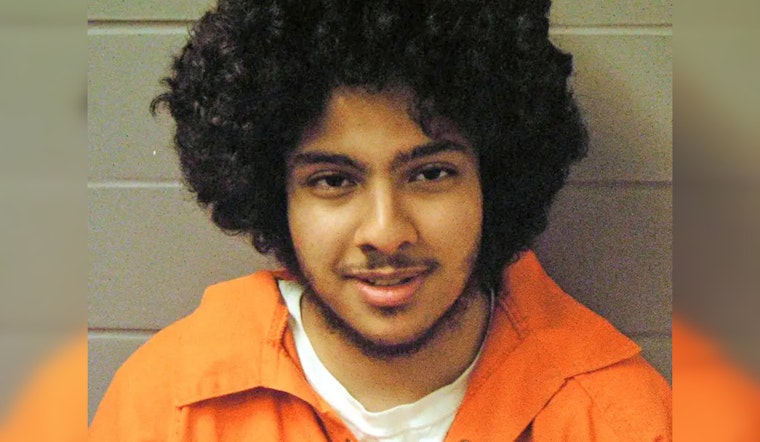
Adel Daoud, having plotted an act of terror in downtown Chicago, has recently seen a substantial increase in his prison sentence, now 27 years; the initial 16-year ruling was judged insufficient by a federal appeals court, and according to a report from the Chicago Sun-Times, the U.S. District Judge Sharon Johnson Coleman's initial decision was said to have "downplayed the extreme seriousness" of the case against Daoud.
This decision came down at the Dirksen Federal Courthouse where Judge Matthew Kennelly, taking the reins after Judge Coleman was removed, outlined that while the appellate court may have misunderstood some aspects of Coleman's decision, such as her view of Daoud's impressionability, this did not negate the severity of Daoud's actions including when he attempted to activate what he thought was a 1,000-pound fertilizer bomb admitting, "He pushed the button", Kennelly reaffirmed Daoud's dangerous intent, despite doubts about Daoud's capacity to carry out his plans independently of the FBI agents investigating him.
The case's complexity is highlighted by Daoud's ongoing insistence that he was entrapped by government efforts, a claim Judge Kennelly has dismissed – Daoud has announced an intent to appeal, his fight for early freedom marked by legal skirmishes over the years including an attempt to retract a specialized guilty plea in 2018 as reported by the ABC7 Chicago.
While prosecutors sought a heftier sentence of 40 years, Kennelly's final determination of 27 years, they concluded, would suffice for rehabilitation; Daoud, implicated in other aggressive incidents such as plotting to murder an informant and attempting to stab another inmate with a sharpened toothbrush, demonstrates a troubling pattern of violent behavior that Kennelly found "incredibly serious" and in the case of the stabbing attempt, the scariest of the three because it had been orchestrated solely by Daoud – despite the fantastical claims Daoud has made from prison regarding "lizard people" and "cosmic aliens" controlling the government.
After serving his sentence, Daoud will face a lifetime of supervised release, involving regular probation officer check-ins and activity monitoring.





