

























































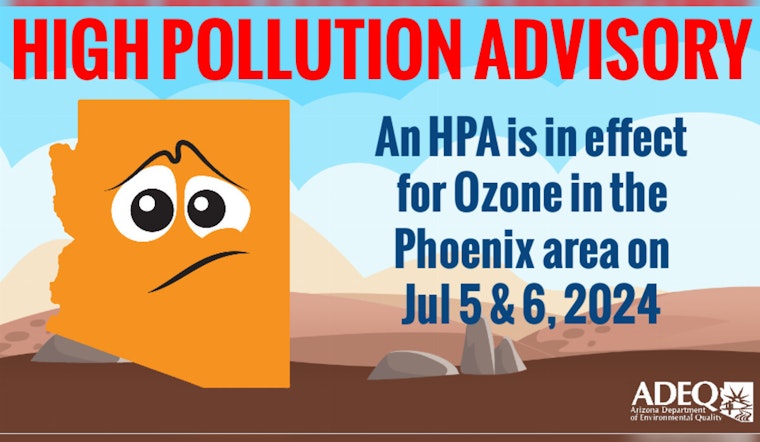
The air we breathe is once again under siege, with the Arizona Department of Environmental Quality (ADEQ) issuing an Ozone High Pollution Advisory for today. It's the kind of news that feels all too familiar in Arizona, but this heads-up is meant to not just inform but also protect those most vulnerable to the effects of ozone pollution—children, the elderly, and individuals grappling with lung conditions like asthma.
With the advisory come a set of guidelines meant to urge residents to adopt certain behaviors and avoid others. The department is urging everyone to find ways to drive less—whether through carpooling, public transit, or telecommuting. They're asking people to wait to fuel their vehicles until after dark, to skip the long queues at drive-thrus, and to choose less harmful, water-based or low-VOC (volatile organic compounds) products for painting and household projects. While these restrictions may seem inconvenient, they're steps we should all try to adopt readily to quickly mitigate this environmental concern, according to the Arizona Department of Environmental Quality.
Meanwhile, there are also outright bans on certain activities within Maricopa County: No burning wood in residential areas, no government workers operating leaf blowers, and a prohibition on using off-highway vehicles. These are not mere suggestions—these are regulations put in force by the ADEQ in light of the heightened pollution levels we’re currently facing. The rationale is clear: cut down emissions, reduce ground-level ozone formation, and protect public health.
Transportation coordinators within corporations and various organizations are also specifically requested to spring into action and relay the message to employees, to prioritize alternative and greener modes of transportation. We've known for some time that the months from April through September mark Phoenix’s extended "ozone season," driven by the chemical reactions that require sunlight and heat to transform nitrogen oxides and VOCs into that hazardous ozone, lingering near the ground level, invisible but insidious in its effects on human health.
To recount, High Pollution Advisory or HPA warns us that pollution levels may soar past the federal health standards. As a community, when these advisories land in our inboxes or flash across our screens, each of us has a responsibility to not merely skim over them, but rather to actively adjust our behaviors. It's both an individual and a collective effort to ensure the air remains as clean as it feasibly can, given the circumstances, and to shield our health from the invisible onslaught of ozone pollution undermining the quality of our environment and lives.





