

























































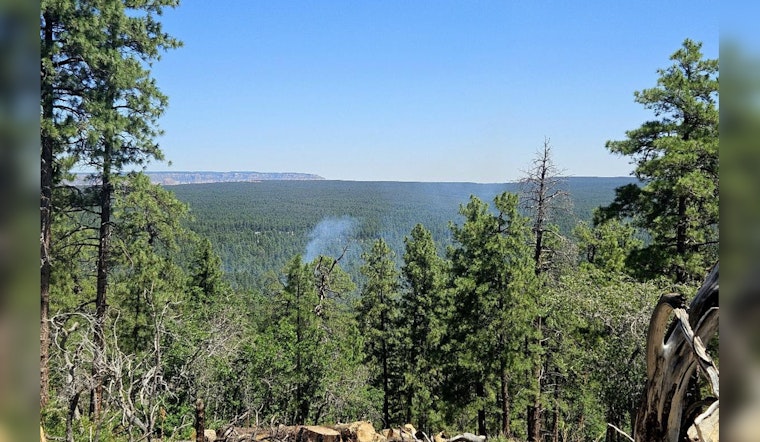
Just outside Tusayan, a lightning strike has sparked a new wildfire, but fire managers are utilizing a strategy that might seem counterintuitive: they're letting it burn. The Lockett Fire, discovered last week, is consuming forest debris in an area previously scorched by the 2014 Belknap Fire. According to an emergency bulletin from the Arizona Emergency Information Network, the wildfire, 12 miles east of Tusayan, aims to clear out dead wood and other fuels while promoting forest health.
Currently limited to 16 acres of ponderosa pine forest, the Lockett Fire's behavior is characterized by a slow spread, which seems to work in favor of the firefighters' confine and contain approach. The strategy entails managing the fire within set boundaries to encourage the growth of native plants and the overall diversity of the forest underbrush. However, hikers take note—this natural conflagration has necessitated a reroute of a 3-mile section of the Arizona Trail, pushing it along Forest Road 310 instead.
Fire management efforts include a cohort of USDA Forest Service crews monitoring the flames, assessing the conditions on the ground, and preparing the surroundings to ensure the fire remains within the designated management zone. In a multi-disciplinary response, specialists like wildlife biologists, archeologists, and meteorologists are also at work to protect the area’s cultural and natural resources, as well as to predict weather trends and track smoke patterns.
Visibility of the smoke from the fire may extend to several forest roads and even reach the eyes of travelers along State Route 64/East Rim Drive within Grand Canyon National Park, although, for those accustomed to the region, fire is a natural and essential component of the ecosystem's lifecycle. Indeed, species like the Ponderosa pine are adapted to survive and even thrive after these lower-intensity fires, which also facilitate decomposition on the forest floor—a process that's typically prolonged in the arid conditions of the Southwest.
The confine and contain strategy aligns with the Forest Service's broader 10-year Wildfire Crisis Strategy. This initiative advocates for the judicious use of fires to foster forest resilience and longevity. By managing the flames tactically, the hope is to reduce the intensity and frequency of future wildfires, making them less of a threat to the ecosystem and neighboring communities.





