

























































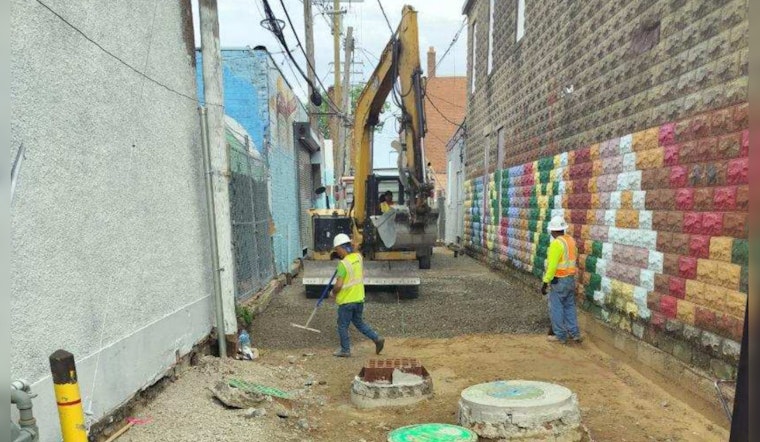
Today marks the start of a transformative initiative as Detroit breaks ground on five 'Arts Alleys', a move made possible by the $5.4 million in federal monies allocated by the American Rescue Plan Act. These alleys are set to pave the way for neighborhood beautification, representing just the initial surge in a larger campaign aiming to spruce up nine alleys citywide, according to a statement obtained by the City of Detroit's official website.
Major Contracting, the firm selected by the City Council for the task, is well-versed in the city's lay of the land, coming fresh off an applauded revamp of Roosevelt Park – yes, the verdant front lawn to the storied Michigan Central Station – and their expertise extends to several urban upgrades including the less glamorous yet essential concrete paving, water mains, and sewers. As they commence work in areas spanning Old Redford to Jefferson Chalmers, the goal is to interlace new infrastructure with local art and history, "Major Contracting is very excited to partner with the City of Detroit and the Detroit Arts, Culture and Entrepreneurship for the ACE Arts Alley Phase 1 Project," the company proudly asserted in a statement trumpeting another chapter in its longstanding partnership with the city.
The revitalization will touch various corners of the Detroit mosaic, from the Manistique Alley lined with environmental art to the Grand River Alley, which will stand in complement to the Dabls Mbad African Bead Museum, bringing a new festival and event-friendly space to Northwest Goldberg. These alleys, each with their own story, are envisioned as more than mere passageways but as venues for community and culture to flourish authentically. Places like Snowdown-Hartwell Alley have already seen enhancements like rain barrels and pollinator gardens, receiving nods for the collaborations like The Neighborhood Association's green initiatives which have garnered not just local but national attention for their environmental work.
Not merely facelifts, each alley is set to receive a distinct thematic makeover; old Redford Alley anchors a thriving arts district while the Yellow Brick Road Alley in Jefferson Chalmers births a community's dream for a sanctuary rooted in African American history, ever since a neighborhood child tragically succumbed to an accident, the alley not only provides a safe place for kids but also highlights the Phillis Wheatley library, a backyard beacon of literature and learning. Meanwhile, the Burrell Trail Alley houses a memorial tribute to Quartez and Cortez Burrell, two young brothers whose lives were lost in a house fire, reminding visitors of the Alley's ties to Alkebu-lan Village's youth-centric mission.
From the historic McDougall-Hunt neighborhood's Bailey Park Alley, envisioned as a mixture of museum, art gallery, and oral history venue, to The North End Alley's Agri-Arts blend which supports urban farming initiatives, Detroit is crafting novel conversations within its concrete canvas, ultimately these alleys are transitioning from decrepit to dynamic, offering a taste of placemaking where residents can not only pass through but also pause and appreciate the inherent value of their surroundings.





