

























































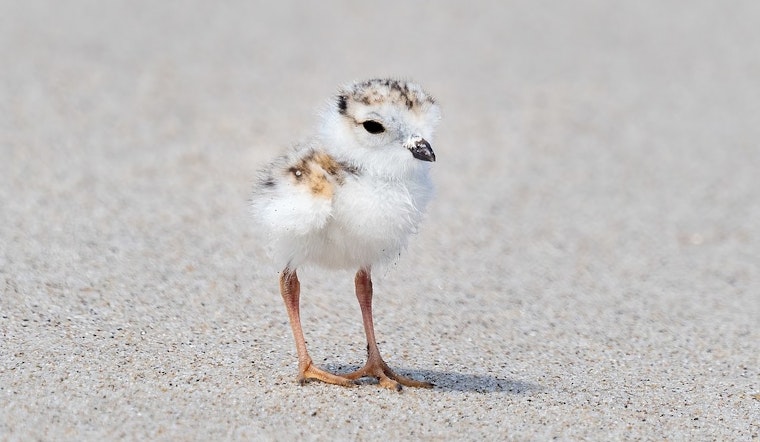
The Montrose Beach dunes have witnessed a bittersweet development in the saga of Chicago's adored endangered species, the piping plovers. A sole survivor from a full clutch of eggs has taken a significant step into the limelight, bearing the name Nagamo—an Ojibwe term meaning "he/she sings," according to a recent announcement by the Chicago Bird Alliance, alongside the Chicago Ornithological Society and the Illinois Ornithological Society. The unique moniker, chosen through a culturally reflective process and submitted by one Mike Doty, is a direct nod to this chick's vocal presence on the Chicago beaches, complementing the species' scientific name Charadrius melodus, as reported by the Chicago Sun-Times.
Imani and Sea Rocket, the chick's proud plover parents, first nested at the Montrose Beach dunes earlier this year, resulting in the hatching of four chicks—yet only Nagamo persisted against the odds. Another pair of plovers, Blaze and Pepper, found more luck in Waukegan where three out of four eggs hatched in late June. The survival of these chicks is critical, owing to the species' designation as endangered in the Great Lakes region. Nagamo, now tagged by the U.S. Department of Agriculture for monitoring, represents a beacon of hope for conservationists and the local communities. The difficulty of safeguarding these chicks in a public space like Montrose Beach has been a significant challenge, "with people entering the protected area," Tamima Itani, lead volunteer coordinator for the Chicago Piping Plovers group, told the Chicago Sun-Times.
Meanwhile, the search for names for the four other growing piping plover chicks had kicked off earlier in the month, as announced by the Chicago Bird Alliance. The naming contest, inviting the public to submit ideas that reflect the diversity and cultural heritage of Chicago, was open until the end of the day on July 11. Past names have honored various cultural and linguistic heritages, ranging from Hazel, celebrating the mother of the environmental justice movement, to Esperanza, the Spanish word for hope, according to information provided by WTTW News.
Each of the chicks, now temporarily referred to by endearing titles like "cutie" and "fluffy," will receive an ID band that not only signifies their membership in their respective clutch but also enables wildlife officials and avid birdwatchers to monitor their movements. Such methods play a crucial role in the conservation efforts of these birds, aiding in the tracking of their migrations and seasonal patterns. Audubon Great Lakes emphasizes the resilience and mobility of these chicks, whose legs are robust enough even soon after hatching to handle the lightweight bands, something that is critical for the species' continued monitoring and protection on their Great Lakes journey, as detailed by WTTW News.





.jpg)