

























































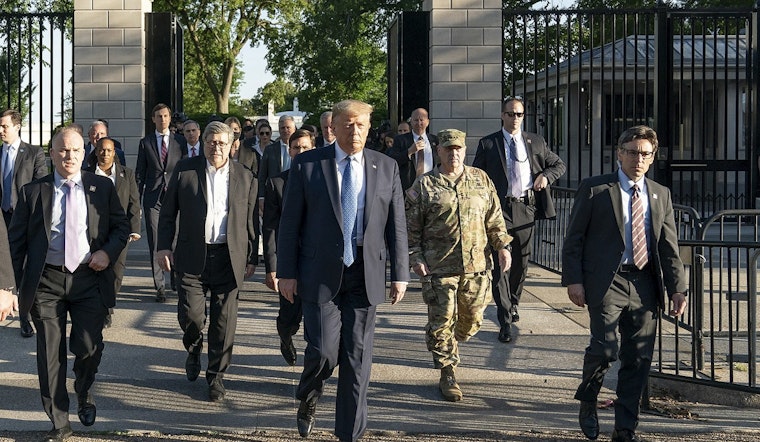
Former President Donald Trump is set to appear at the National Association of Black Journalists (NABJ) Annual Convention & Career Fair in Chicago, sparking a variety of responses online and from the NABJ community, the Chicago Tribune reports. The convention, which takes place from Wednesday through Sunday, will feature a session where Trump will engage in a question-and-answer dialogue with political journalists Rachel Scott from ABC News, Harris Faulkner from FOX News, and Kadia Goba from Semafor. The aim of the session is to address "the most pressing issues facing the Black community," according to an NABJ release.
Despite the NABJ's stance of not endorsing political candidates, they emphasized the importance of members asking "tough questions that will provide the truthful answers Black Americans want and need to know," said NABJ President Ken Lemon in a statement. Trump’s attendance at the event comes at a pivotal time when the Democratic Party is gearing up to celebrate Vice President Kamala Harris's historic presidential nomination in the very same city, and her participation is still pending, the NABJ noted.
The talk with Trump promises to be a highlight of the convention, which will not be open to the public but will be live-streamed on platforms such as the NABJ’s YouTube and Facebook pages, as NBC Chicago detailed. In their announcement, the Trump campaign boasted that the former president "is the only presidential candidate who can deliver results on day one because he already has." Meanwhile, his proposed policy to expand stop and frisk, among other issues, has been met with criticism from those who see the practice as disproportionately damaging to Black communities.
Reaction to the news of Trump's upcoming appearance was mixed in the NABJ community. Some, like journalist Arionne Nettles, expressed her discomfort with Trump’s attendance, likening the NABJ convention to a "safe space" away from the hostility often faced in newsrooms. Tia Mitchell, however, a correspondent for the Atlanta Journal-Constitution, defended the invitation and reiterated on social media that while members may disagree, no one is compelled to attend, saying, “There is precedent of such invitations and great care taken with this particular one,” according to the Chicago Tribune.
The NABJ's decision to host Trump has indeed spurred debate among its ranks and the broader journalism community, as it does with any divisive figure. The upcoming session offers a rare chance for direct questioning and perhaps stark insight into Trump's plans and policies, particularly those that affect Black Americans, an opportunity the NABJ seems keen to capitalize on in its continued pursuit of journalism that addresses a range of viewpoints and pressing social issues.





.jpg)