

























































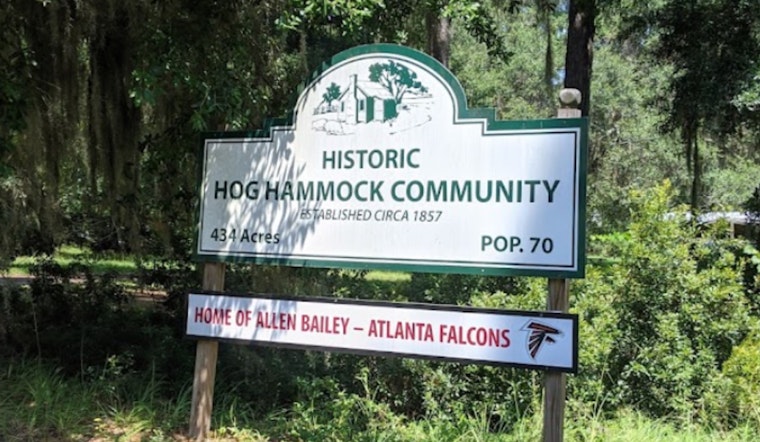
Residents in one of the few remaining Gullah-Geechee communities, direct descendants from the enslaved people of the South, are fighting to maintain the integrity of their historic homes against recent zoning changes. According to a report by WABE, concerned citizens of Hogg Hummock on Sapelo Island submitted over 2,300 signatures on Tuesday, seeking a referendum to overturn zoning adjustments that may push them off land their families have kept for generations.
The historically Black Hogg Hummock community, home to 30 to 50 residents, finds its roots in individuals formerly enslaved on nearby plantations. Their pushback comes after McIntosh County commissioners’ decision last September which weakened zoning laws that once acted as a safeguard for the community, increasing the permissible house size and, potentially, the property taxes. "We know there is still a long way to go, but man, this is significant," Josiah "Jazz" Watts, a Hogg Hummock descendant and homeowner, expressed in a statement obtained by WABE after submission of the petition.
With these signatures still subject to review and certification, organizers like Megan Desrosiers, executive director of One Hundred Miles, expect the issue to be presented to voters in McIntosh County by this fall. In parallel to this community effort, local landowners are also challenging the rezoning through legal channels, after an initial lawsuit was dismissed on technical grounds—a refiling has taken place, seeking justice in a courtroom.
Isolation has defined the existence of Sapelo Island, approximately 60 miles south of Savannah, accessible only via the water. The state of Georgia has dominated the island's ownership since 1976, holding most of its 30 square miles of wild marshland. Meanwhile, Hogg Hummock's history is nationally recognized, earning a spot on the National Register of Historic Places in 1996. Yet, it's this local government—situated in a predominantly white McIntosh County—that the Gullah-Geechee community must rely on for their heritage's preservation.
The struggle of the Hogg Hummock residents is a profound echo of the broader African American fight for land and legacy, a continuous thread woven through the fabric of the nation’s history. From North Carolina to Florida, Gullah-Geechee communities are not merely clusters of homes but are bastions of a unique culture formed by a people whose ancestors turned the trauma of enslavement into a resilient, living heritage.




-4.webp?w=160&h=400&fit=crop&crop=edges)

