

























































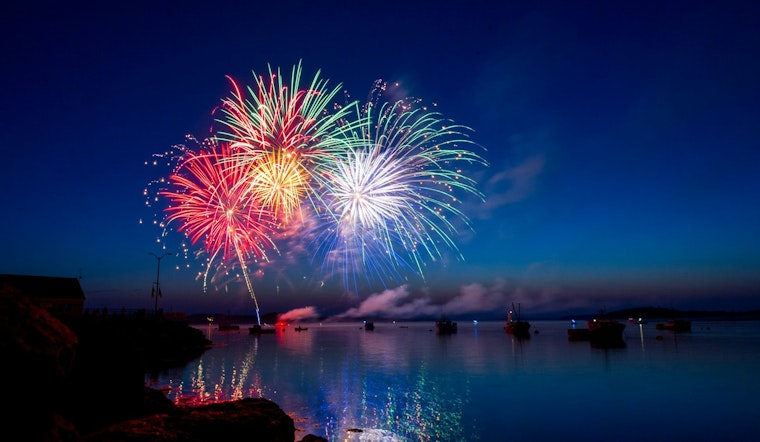
As fireworks light up the sky this July Fourth, a stark divide remains in laws governing their use. Various suburbs in Illinois are taking a firm stance against illegal fireworks, upping their enforcement and ramping up fines to as much as $750 for violations. The concerted effort by these municipalities is to stymie the tradition of private pyrotechnics that often accompany Independence Day celebrations.
The stance in Illinois is reflected in towns like Matteson, Park Forest, and South Chicago Heights, with each layering penalties for unauthorized use of fireworks. "We do the best we can knowing that the amount of officers on the street (and) our call volume typically doubles, mainly because of fireworks complaints," Matteson police Chief Michael Jones told the Chicago Tribune. Signage and social media campaigns serve as warnings to residents who might be considering skirting the law. Jones also noted the collaborative nature of these efforts as "several agencies locally have asked us where we got our signs made," indicating a regional commitment to this approach.
Still, just because fireworks can be purchased doesn't make them legal to use. The Park Forest Police Department echoes this sentiment after implementing their sign campaign following Matteson's lead. Police Chief Brian Rzyski stated, "I think that the public may not be 100% aware that they are (illegal)," according to the Chicago Tribune. He acknowledges that while most people have good intentions, the risk of misdirection and premature explosions are too great to ignore.
Regionally, Illinois isn't alone in its regulated approach. As CBS News reports, fireworks laws vary widely across the United States. While some fireworks are legal in 49 states plus Washington, D.C., Massachusetts stands as the lone holdout where all private fireworks are banned. This array of regulations reveals a patchwork of legislation that ranges from complete prohibition to more permissible environments, though many states also restrict the sale, possession, and use of fireworks to non-aerial, non-explosive, or "safe and sane" types.
What drives these restrictions? Most often, it's safety concerns. Risks of injury, property damage, and wildfires have led many states to enforce stringent fireworks laws. California, known for its wildfire susceptibility, is one such state issuing stern warnings this week against fireworks usage in some counties. In 2023 alone, fireworks-related incidents resulted in eight deaths and roughly 9,700 injuries, as reported by the U.S. Consumer Product Safety Commission, underlining the hazards associated with these celebratory explosives.
Amid the festivities and celebration of independence, the presence of law enforcement reminds us that freedom still submits to the framework of law. As the skies burst with color and light, ground-level awareness and adherence to local ordinances dictate the boundaries of celebration. For citizens who observe rogue fireworks or suspect illegal activity, they are urged to report it to local authorities or the U.S. Bureau of Alcohol, Tobacco, and Firearms hotline, ensuring that jubilation doesn't veer into jeopardy.





