

























































MIT is stepping up its game to tackle the challenge of extreme heat, a growing concern due to climate change. With the number of sizzling days on the rise, the Massachusetts Institute of Technology has been proactive in developing strategies against the heat's impacts. As MIT's Office of Sustainability's Brian Goldberg points out, it's not just about the data but the real effects these temperatures will have on the campus and its community. "We know what the science is showing, but how will this heat impact the ability of MIT to fulfill its mission and support its community?" Goldberg asked in a statement to MIT News.
The institute's response includes the Climate Resiliency and Adaptation Roadmap, which is being crafted as part of MIT's larger climate action strategy. This roadmap is backed by a cohort of departments on campus, such as Urban Studies and Planning, and groups including the Urban Risk Lab. It leans heavily on not only planning but also actual research into how MIT's structures and, more importantly, people interact with the increasingly hot environment. A recent report from the Resilient Cambridge project underscores the urgency; it projects that the average number of days above 90 degrees Fahrenheit could triple compared to historical data.
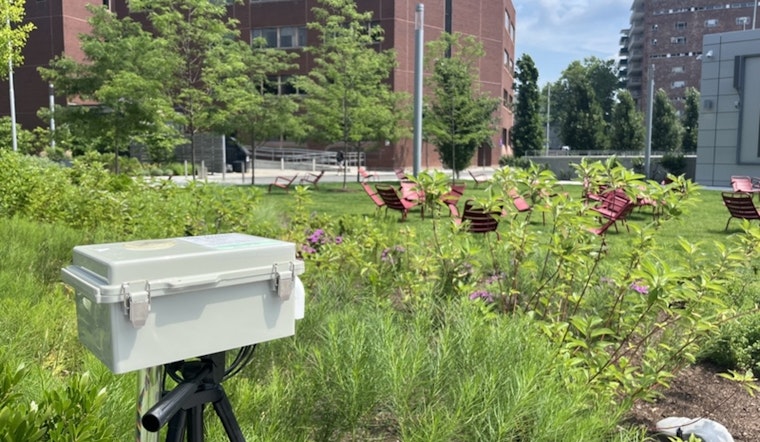
One critical aspect of MIT's ongoing work involves gathering more specific and local data on how heat affects their campus. To this end, new tools such as heat sensors are providing a closer look at campus hotspots. These sensors are recording temperatures multiple times an hour, painting a detailed picture of the climate challenges faced by the university. Sanjana Paul, previously with Senseable City and now a graduate student, oversees this data collection and confirms the surprising heat levels recorded, with some areas "regularly going over 100 degrees during heat waves," according to an interview with MIT News.
Mitigating the heat involves studying building-level impacts and the myriad factors that contribute to heat risk. Insight is not only culled from sophisticated modeling and sensors but also from community input. Listening to those who experience these conditions firsthand helps adapt plans for resilience with people as the central element. Susy Jones from the MIT Office of Sustainability emphasizes the individual differences in experiencing heat, saying, "We need to design strategies and augment existing interventions with equity in mind, ensuring everyone on campus can fulfill their role at MIT," in words conveyed to MIT News.
As MIT gears up to finalize and publish its Climate Resiliency Dashboard and the corresponding roadmap, the focus extends beyond the university's own needs. Julie Newman, the Director of Sustainability at MIT, sees their approach as one that not only solves the institution's own issues but also as a model for other universities and communities. Indeed, the broader goal is to align with broader city and state efforts, forming a cohesive front against the increasingly harsh temperatures brought on by a changing climate, as reflected in comments to MIT News. Yet, with the variability of climate impacts, this work is not seen as having a definitive endpoint. As Goldberg relays, "This work is not something you ever say is done," indicating a commitment to continuous adaptation and learning.



