

























































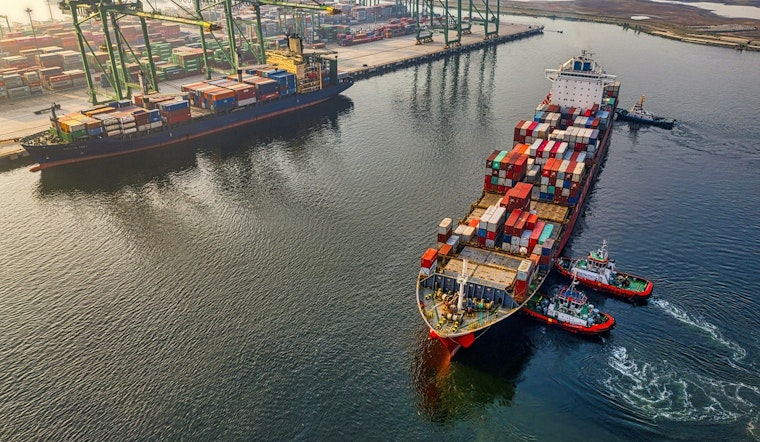
In efforts to tackle climate change, the maritime industry is considering a shift from diesel to ammonia as a cleaner fuel alternative for shipping. However, a recent MIT study has raised concerns over potential public health implications, suggesting that without stringent emission controls, the switch could precipitate a significant increase in air pollution-related health risks.
Currently, maritime shipping's hefty diesel engines help power global trade but at the cost of driving climate change and affecting human health, contributing almost 3 percent of the world's CO2 emissions and playing a role in approximately 100,000 premature deaths annually. Ammonia is being eyed as a nearly carbon-free maritime fuel, but, the study warns, it is no silver bullet. In a scenario without updated emissions regulation, the transition to ammonia could be responsible for up to about 600,000 extra deaths each year due to increased air pollutants.
As reported by the researchers, the combustion of ammonia in ship engines releases potent greenhouse gases such as nitrous oxide (N2O), about 300 times more impactful than carbon dioxide, along with nitrogen oxides (NOx), and potentially unburnt ammonia. These substances contribute to the development of fine particulate matter, a hazardous air pollutant known to cause severe health issues such as heart attacks, strokes, and respiratory problems. "Saying that ammonia is a 'clean' fuel is a bit of an overstretch. Just because it is carbon-free doesn’t necessarily mean it is clean and good for public health," Anthony Wong, a postdoc at the MIT Center for Global Change Science and lead author of the study, told MIT News.
On a brighter note, cleaner engine technologies could significantly mitigate these risks. The study found that, even in the absence of new regulations, adopting cleaner engine technology could reduce annual premature deaths to around 80,000, roughly 20,000 fewer than those currently linked to shipping emissions. With stricter global regulations and the implementation of cleaner technologies, the number could potentially decrease by about 66,000. However, these outcomes are contingent upon both technological innovations and a commitment to comprehensive policy reform worldwide.
While the findings indicate that ammonia has the potential to benefit both climate and air quality, its implementation would demand a balanced approach. Noelle Selin, an MIT professor and one of the study's co-authors, emphasized the integrated necessity of policy and technology developments: "There is a potential for ammonia in shipping to be beneficial for both climate and air quality, but that requires that regulations be designed to address the entire range of potential impacts, including both climate and air quality," she said in an interview with MIT News.
The regional impact of the fuel switch would also be unequal, with East Asia predicted to experience the bulk of the detrimental effects due to weaker air quality regulations and high shipping volumes. Addressing these challenges calls for coordinated efforts on a global scale to protect the health and environment of communities worldwide. With an aim to spur collective action, the research team continues to refine their assessment and call on the marine industry and policymakers to utilize their findings in upgrading global shipping emission standards.





