

























































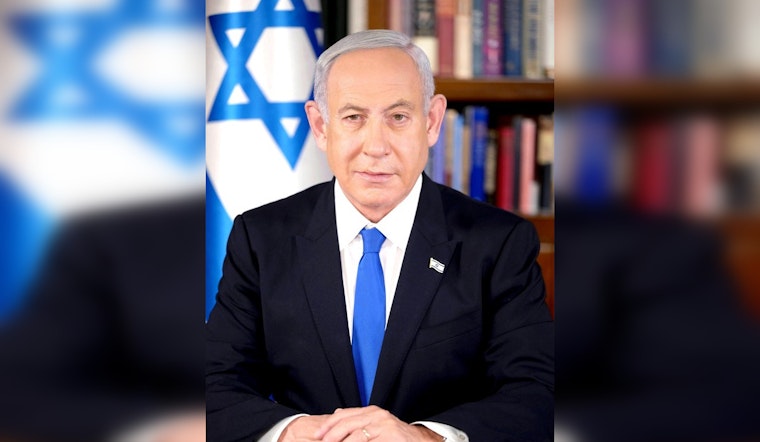
Prime Minister Benjamin Netanyahu's recent call to Congress for the U.S. to fortify its partnership with Israel was met with both standing ovations and a notable wave of boycotts. Emphasizing Israel's resolve, Netanyahu vowed they would do "whatever it must" to confound Hamas and recover hostages from Gaza, however amid his efforts to rally support, protests unfolded outside the Capitol, underscoring a divided response to his leadership and military strategy, as reported by WABE.
The address arrived as the Gaza conflict persists into its ninth month and as Congress considers an expedited $26 billion aid package for Israel which saw opposition from 37 Democrats. "When we stand together, something very simple happens: We win, they lose," Netanyahu stated, encapsulating his stance with a "Total Victory" cap he wore prior to landing in Washington, yet beneath the bravado, a cease-fire sought by President Biden appears no closer, despite ongoing negotiations in Qatar, and repercussions from a war that has seen the Palestinian death toll surpass 39,000, of which a large portion are women and children, according to Gaza's Ministry of Health.
Netanyahu's visit continues as he is expected to meet with President Biden and Vice President Harris—whose presence at his Congress speech was notably absent due to a conflicting engagement in Indianapolis. “You do what you think is the right thing for you to do. I will be in the audience listening to the prime minister — I think that’s what my responsibility is,” Representative Gregory Meeks told WABE. The visit is not without tensions; Biden, while supportive of Israel's right to defend itself, has critical views on the conduct of the war, especially the civilian casualty count, which remains a contentious aspect of U.S.-Israel relations.
Notably, the political landscape is already shifting rapidly; Biden has confirmed his exit from the presidential race, endorsing Harris as his successor, and a recent assassination attempt on former President Trump has ruptured the news cycle, leaving less airspace for discourse on U.S.-Israel policy. Nevertheless, Netanyahu's dynamic with U.S. leadership, both present and past, including a relationship with Trump that cooled after Netanyahu acknowledged Biden's election win, underscores an intricate narrative playing out amidst a wider backdrop of geopolitical chess where attempts to keep regional conflicts from escalating are ever-present.





