

























































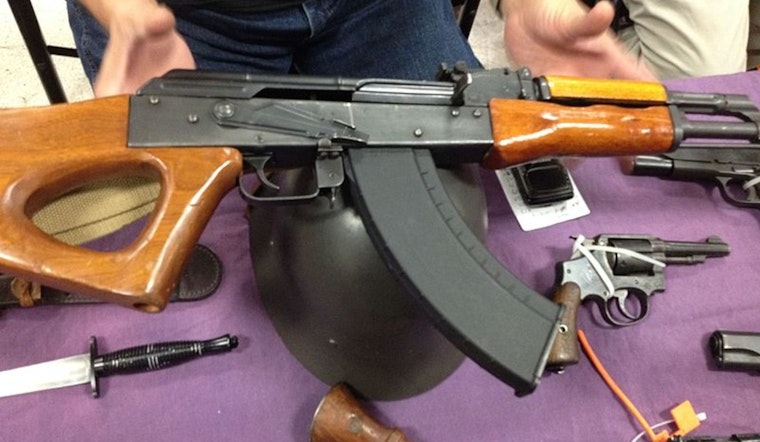
The U.S. Supreme Court has decided not to take on the challenge to Illinois' assault weapons ban, as the state marks the approach of the second anniversary of the Highland Park shooting that left seven people dead and led to the enactment of the ban. In an order issued on Tuesday, the court denied petitions for writs of certiorari after the Seventh Circuit Court of Appeals previously upheld the ban, a decision which Justice Clarence Thomas described as relegating "the Second Amendment to a second-class right," according to a WTTW News report.
Despite the decision to sidestep the controversy for now, both Justice Thomas and Justice Samuel Alito signaled the potential to revisit the topic in the future; however, the fight over the law is poised to continue with renewed vigor in district courts which had been anticipating guidance from the highest court, and Hannah Hill, executive director of the National Foundation for Gun Rights, assured, "We WILL outlast both the gun grabbers and the Supreme Court’s procedural reticence," as she articulated on a post and the assurance seemed less a prediction than a promise cast into the winds of an ongoing and weary battle over America's soul and its weapons, as per the Chicago Sun-Times article.
Illinois' law which was signed into effect in January 2023, primarily bans the sale of assault weapons and limits the purchase of magazines to 10 rounds for long guns and 15 for handguns; the law came as a direct response to a tragic mass shooting during a Fourth of July parade, one that was carried out with an AR-15-style rifle. John Schmidt of the Gun Violence Prevention PAC (G-PAC) of Illinois supported the Supreme Court's decision by stating, "That correct conclusion now stands as we go forward with continued enforcement of the Illinois law," as reported by the Chicago Sun-Times.
The pushback from the law's opponents hinges on the classification of the banned firearms, asserting that the weapons are predominantly used for lawful purposes such as self-defense, hunting, and range training, and contesting that "banning them is 'off the table,'" which was countered by Illinois attorneys highlighting the historical precedence of regulating weapons that come into civilian use following their initial "criminal misuse," as detailed by the Chicago Sun-Times. Amidst this tug of war, the layers of legal argument and counterargument weave a complex fabric of Constitutional interpretation and public safety concerns as the nation grapples with the balance of individual rights and collective security, and as such, Chief Justice John Roberts wrote that some lower courts had "misunderstood the methodology of our recent Second Amendment cases," striking a chord for further clarifications in future rulings, a need underscored in his opinion piece for the United States v. Rahimi case.





