

























































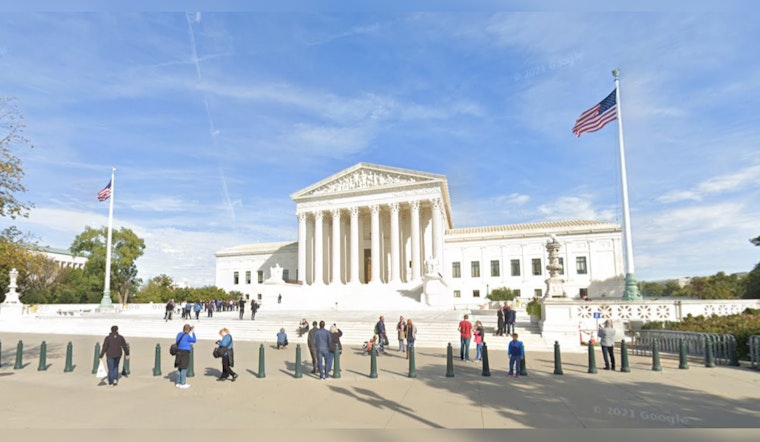
In a landmark 6-3 decision, the United States Supreme Court has redirected the pressing case regarding former President Donald Trump's immunity back to the lower courts, casting a shadow on the likelihood of a trial commencing before the highly anticipated November election. As WABE reports, this move by the justices marks the first assertion that past presidents are entirely shielded from prosecution for actions performed in an official capacity, whilst they possess no such immunity for unofficial acts. However, this groundbreaking distinction now tasks lower court judges with the complex duty of applying these standards to the circumstances surrounding Trump.
The Supreme Court's resolution prolongs the wait for a trial in the case spearheaded by Special Counsel Jack Smith, who is investigating allegations that Trump attempted to overturn his loss in the 2020 presidential election. Indeed, the court's choice to involve itself in this second crucial Trump-related situation this term, alongside their refusal to prevent him from seeking office again due to his conduct following the 2020 defeat, puts the justices in a directly—and potentially uneasy—position concerning the upcoming November election ballot.
Aside from the issues at hand in Washington D.C., Trump persists in facing multiple legal battles. Cited by WABE, in May, Trump earned the dubious distinction of becoming the first former president convicted of a felony, in a New York case regarding the falsification of business records to conceal a hush payment made during the 2016 election to an adult film star who alleged a sexual encounter with him—a claim he denies. The federal inquiries, led by Smith, extend to allegations of mishandling classified information in a case arising in Florida and, in Georgia, to claims entwined with Trump's actions post-defeat in 2020.
Should Trump dodge trial in D.C. before the 2024 election and not secure another presidency term, he would presumably find himself promptly before the courts. Contrarily, a victorious return to the Oval Office could empower him to appoint an attorney general eager to dismiss not just this case but the other federal indictons he faces. Additionally, the possibility of a self-issued pardon looms, although this presidential power would not extend to his state court conviction, as articulated by WABE.
In midst of ongoing scrutiny, the Supreme Court's handling of this immunity case reveals the delicate tightrope walked by justices who have found themselves in the crosshairs of partisan controversy. Justice Clarence Thomas has faced calls for recusal due to his wife's involvement in the Janurary 6 rally, while Justice Samuel Alito has similarly been asked to step down over reports linking flags similar to those carried by January 6 rioters at his properties—both chose to participate in the proceedings, nonetheless. Trump's original trial date of March 4 was previously stalled due to his requests for court-sanctioned delays, further complicated by the Supreme Court's decision for extensive review of the issues by the highest court in the land.
Amid these developments, a consistent thread in the decisions of lower courts remains clear. Prior to the Supreme Court's involvement, a trial judge and a three-judge appellate panel held unanimously that Trump is subject to prosecution for his conduct while president and in the lead-up to Jan. 6. "For the purpose of this criminal case, former President Trump has become citizen Trump, with all of the defenses of any other criminal defendant," the appeals court stated in February. U.S. District Judge Tanya Chutkan, who is poised to preside over the trial in Washington, has rejected Trump's immunity claim outright in December, famously stating, "former Presidents enjoy no special conditions on their federal criminal liability.”




