

























































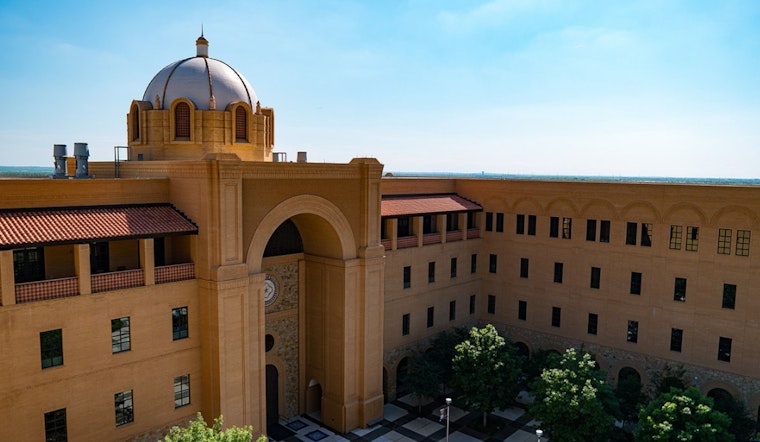
A professor and her students at Texas A&M University-San Antonio are at the forefront of pioneering water testing to monitor pathogens within the city's wastewater systems. In the shadow of the COVID-19 pandemic's wake, the team's work could revolutionize how San Antonio anticipates and mitigates disease spread, scrutinizing our most unassuming of resources: sewage.
The propulsion behind this health safeguard is Dr. Davida Smyth, an associate professor in the Department of natural sciences at TAMUSA. Dr. Smyth and her team are harnessing wastewater surveillance, a technique previously spotlighted during the pandemic, to suss out pathogens imperceptible to the naked eye. According to a San Antonio Report, Smyth has articulated this approach as "an unbiased and non-invasive way" to glean insights into the behavior of infectious diseases. Cities like Houston and New York have employed similar tactics to tackle coronavirus variants.
Amidst these scholarly endeavors lies the potential boon of a $1 million grant, tentatively secured with the advocacy of Congressman Joaquin Castro and contingent on the passing of FY2025 federal appropriation bills. This influx of funding, earmarked for sophisticated lab equipment, could sharpen the precision of pathogen quantification, a task currently challenged by the limitations of the lab's existing apparatus. "We’re taking existing techniques and strategies and using them to look for threats we haven’t encountered yet," Smyth told the San Antonio Report.
Cutting-edge gear like digital PCR machines are awaited eagerly. Such machinery would not only economize time and resources but afford a clarity hitherto unreached in disease surveillance. "It was the major thing I wanted from this funding, was if we can buy a digital PCR machine … it would just be really great," Smyth explained.
The TAMUSA team, which includes graduate student Blake Meche, a U.S. veteran routinely clad in a lab coat and ball cap, is currently filtering through wastewater in search of a medley of dangers – from COVID-19 and MRSA to E.Coli and even unnamed hazards. All through the vector of genetic sequencing, the unseen becomes seen. "So you could literally find the source," Smyth stated with respect to tracking down theorigins of contamination within a community.
Honing in on pathogen presence without invading privacy remains a pivotal advantage of wastewater analysis. It's a collective diagnostic sans the one-on-one scruples, as Smyth encapsulates: "We're not looking at individual people, right?" she said. "We're getting these really large sample sizes, which is why it's cheaper and also unbiased." If supported by further funding, this blueprint that blends academic pursuit with public health could well morph into a centralized city or county effort, reinforcing sewer systems as unexpected sentinels of well-being.





