

























































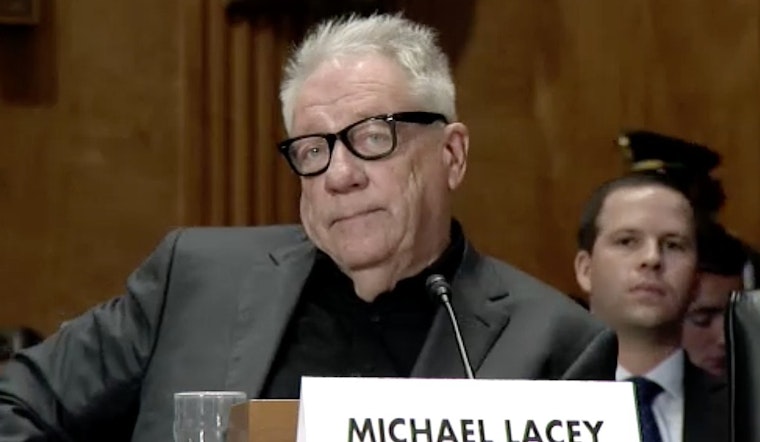
Michael Lacey, co-founder of the once-prominent classifieds site Backpage.com, was handed a 5-year prison sentence and a $3 million fine for the role he played in a case that revolved around laundering money derived from ads that promoted prostitution. The sentence was passed yesterday in Arizona, with the presiding judge asserting that despite Lacey claiming his involvement was minimal, he chose inaction when confronted with allegations of illicit activity on Backpage.
As reported by FOX 10 Phoenix, the 76-year-old was previously acquitted on dozens of insubstantial evidence charges, yet he remains accused on approximately 30 counts related to money laundering and facilitating prostitution. Contrary to Lacey's defense stating he was engrossed with his alternative newspaper chain, U.S. District Judge Diane Humetewa highlighted during sentencing, "In the face of all this, you held fast. You didn't do a thing."
Joining Lacey in conviction are Backpage's CFO, John Brunst, and EVP, Scott Spear, both of whom were sentenced on August 28 to ten years in prison each. According to 12 News, the site allegedly garnered over $500 million from prostitution-related activities since 2004 until its closure in 2018. The prosecution has accused Lacey of using sophisticated methods involving cryptocurrency and international banks to conceal profits.
Notably, a marketing director affiliated with Backpage has already entered a guilty plea for his involvement in a plan to grant complimentary advertisements to prostitutes. Carl Ferrer, Backpage's CEO when the government shuttered the site, also entered guilty pleas in both federal and state cases on separate but related charges. Although Lacey and his business partner sold their Backpage interests in 2015, prosecutors believe they retained control. In their zeal to combat the ills under scrutiny, the FBI noted a decline in their capacity to track victims, post the site's closure, a fact acknowledged in a Government Accountability Office report cited by FOX 10 Phoenix.
The site's complicity in illegal activities was covered with a veneer of legitimacy and misleading defenses, as stated by the prosecution. Even though a Federal memo in 2013 mentioned efforts by Backpage to deter criminal acts on their platform, the prosecution argued these were but measures meant to mask the true nature of the advertised services. This memo, demonstrating possible cooperation with law enforcement at the time, was barred from being discussed during the trial due to its age and context relative to the charges levied against Lacey and his associates.





