

























































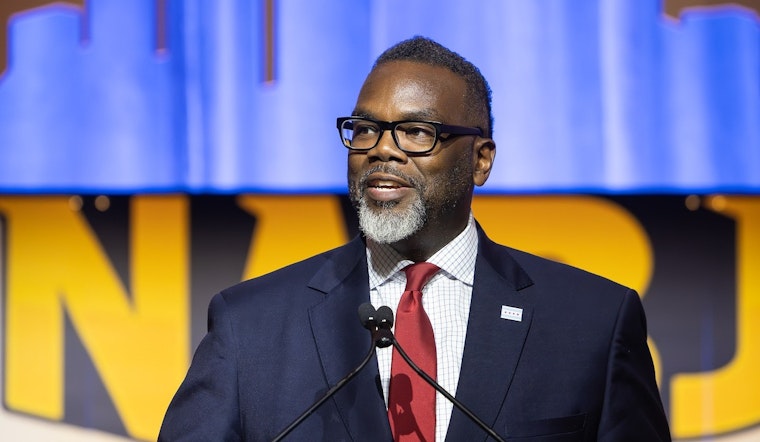
Chicago Mayor Brandon Johnson has announced significant milestones in the city's post-pandemic recovery efforts, as detailed in the 2024 ARPA Recovery Plan Annual Report. The report, released on August 1st, outlines the strategic deployment of $1.887 billion in federal funding from the American Rescue Plan Act (ARPA), aimed at supporting the city's most vulnerable communities and fueling an equitable recovery from the COVID-19 fallout.
According to the report, "Our commitment to the people of Chicago is unwavering," Mayor Johnson stated. "By leveraging these federal funds strategically, we aim to build a stronger, more equitable City, and I am proud of all the progress we have made." These funds are being utilized across six core policy pillars including Youth & Economy, Community Safety, Mental Health & Wellness, Housing & Homelessness Supports, Human Rights, Arts & Culture, and Effective Governance. The administration's efficient management of these finances has led to 90 percent of the SLFRF grant being obligated, and 83 percent expended as of this July.
Budget Director Annette Guzman emphasized the strength of the ARPA Road to Recovery Plan, asserting, "This one-time funding is a unique opportunity to address long-standing issues and create sustainable change." With 29 percent more obligations and a 24 percent increase in expenditure since July 2023, these initiatives demonstrate a robust progression, particularly in community programming, which has seen a significant uplift.
Key highlights from the report feature investments in youth-centered programs, such as the Chicago Empowerment Fund, which is set to support approximately 10,000 households, and the Youth Opportunity Programs, accounting for over $66 million towards youth employment and leadership. Community Safety initiatives boast a $23 million contribution towards violence interruption efforts, targeting the areas most ridden by violence. The Mental Health Equity Initiative represents a $20 million pledge to expand essential services and has facilitated the reopening of three mental health clinics across marginalized neighborhoods. In perpetuating a vision for housing stability, the administration has also directed resources towards the Rapid Rehousing Program, a $32 million effort designed to assist rapid transitions into stable living environments for vulnerable individuals.
The report also underscores challenges in the Human Rights, Arts & Culture sector. The Artist Relief and Works Fund, an $11 million investment, aims at supporting individual artists and cultural organizations that fell outside other relief programs. On the governance front, the Johnson Administration is set on heightening transparency and community engagement with monthly City Council reports and an upcoming dashboard that's scheduled to go live in fall 2024. "The City of Chicago's strategic use of SLFRF dollars is a testament to our commitment to equitable recovery," indicated Chief Operating Officer John Roberson. "Our approach is holistic, involving comprehensive evaluations and adjustments to ensure that every initiative has the potential for long-term sustainability."





