

























































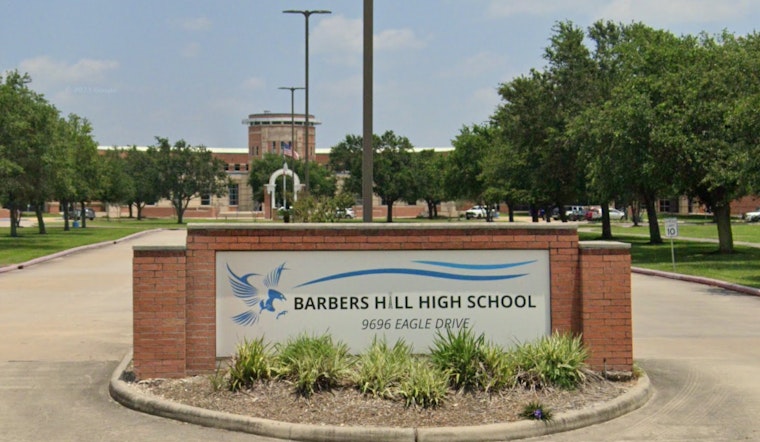
In a recent twist to an ongoing legal battle involving a Black student's hairstyle, US District Judge Jeffrey Brown has dismissed most claims while maintaining a sex discrimination allegation. The lawsuit, originating from Barbers Hill High School student Darryl George's refusal to cut his dreadlocks, put a spotlight on the institution's grooming policy. George, backed by his attorney Allie Booker, alleged that the school's policy discriminated based on race and violated the CROWN Act, as reported by the Houston Chronicle.
Judge Brown noted that George's hairstyle is "an outward expression of his Black identity and culture" but did not find sufficient evidence to sustain the racial discrimination claim. Consequently, the policy that prohibits male students from having hair beyond a certain length has stood its ground, despite claims it targets Black students' hairstyles. In the statement obtained by the ABC13, Brown reasoned that there wasn't enough to show "a persistent, widespread practice of disparate, race-based enforcement of the policy."
While many claims were scrapped, including those against Texas Gov. Greg Abbott and Attorney General Ken Paxton, a glimmer remains for gender equality under the school's grooming codes. Judge Brown's order called into question the lacking rationale for different hair length standards for male and female students, therefore, allowing the sex discrimination claim to progress. Superintendent Greg Poole defended the policy, leading to these events, highlighting its role in maintaining the district's high standards. Poole's outlook, obtained by the Houston Chronicle, is one of community-backed practices, saying, "Our policies and procedures for 95 years have been established by our community via a locally elected board of trustees."
Meanwhile, Darryl George's junior year was marred by suspensions over his hairstyle, bringing into sharp relief the personal cost of such policies. As the school year looms, it's unclear if George will be in the classroom or dealing with disciplinary measures once again. The overarching impact of this case has rippled beyond Barbers Hill, with the Texas Legislative Black Caucus considering changes to the CROWN Act—designed to protect against hair discrimination—in their next session. This move, following Judge Chap B. Cain III's ruling in the school district's favor, could potentially redefine the legal landscape around cultural hairstyles in schools and workplaces.
This conversation on grooming and dress codes is far from over, as another federal lawsuit filed by two students in May 2020 remains active. That lawsuit, as ABC13 reported, had seen a temporary injunction granted, suggesting possible violations of free speech and discrimination laws.





