

























































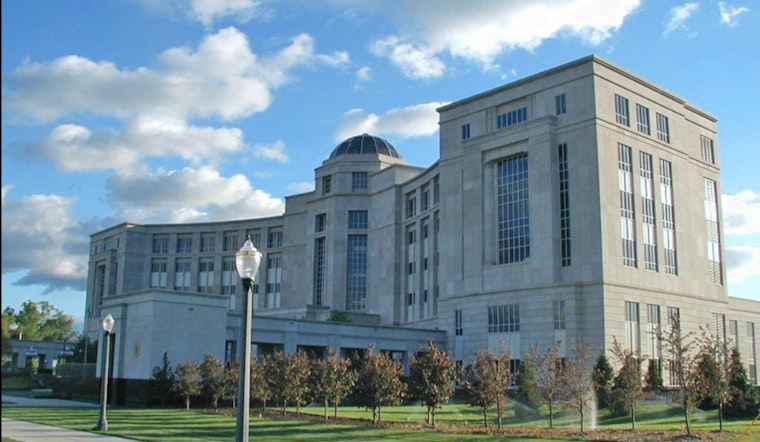
The Michigan Supreme Court has decided not to review cases related to the financial fallout of COVID-19 restrictions, according to the Detroit News. The refusals leave intact lower court decisions concerning businesses and students affected by pandemic closures instituted under Gov. Gretchen Whitmer's administration.
In a set of rulings that let stand previous appellate court decisions, the high court's actions come as a blow to Michigan businesses like gyms, restaurants, and bars, who were seeking compensation for lost income due to state-mandated shutdowns, and to a group of college students asserting they were owed a partial refund after universities shifted to an online format. "It is deeply disappointing that the Michigan Supreme Court refused to even hear the case,” State Sen. Ed McBroom, R-Vulcan, told The Detroit News, in relation to the income tax lawsuit.
Moreover, the matter of the state's income tax was another issue declined by the court. The absence of a ruling means Michigan's individual income tax will revert to 4.25% in 2024 after a temporary reduction, as reported by The Detroit News. This decision aligns with a Court of Appeals ruling that rebuffed arguments put forth, by Republicans and business groups, for a permanent tax decrease under a state law linking tax rates to general fund revenue exceeding inflation.
Justice David Viviano, who penned dissenting statements supported by Justice Richard Bernstein, criticized the majority for not addressing "unresolved novel and important questions regarding federal and state takings jurisprudence," and suggested that cases such as The Gym 24/7 Fitness's claim of property taken without just compensation, could have been sent to the trial court for further discovery. "Plaintiff ... has raised plausible claims that the government took its property without just compensation, and genuine issues of material fact exist regarding its claims," Viviano added, as noted by The Detroit News.
Regarding the claims by students for reimbursement, the Court of Appeals previously determined in February 2022 that the universities were not contractually obligated to provide in-person instruction. However, Viviano pointed out a flaw in this reasoning, observing that the tuition agreements "not binding express contracts because they failed to specify which classes the universities were obligated to provide and in what format,'" as mentioned by The Detroit News. Despite similar cases across the nation mostly ending in defeat, this month, a U.S. Court of Appeals ruling allowed a lawsuit from landlords seeking compensation for losses incurred due to the federal eviction moratorium to proceed, a detail highlighted by mlive.
The local news, including WWJ Newsradio and MLive, provided a detailed overview of the lawsuits related to pandemic economic impacts in Michigan. They covered the different positions of businesses, students, and dissenting justices, giving a clear picture of the legal situation.





